

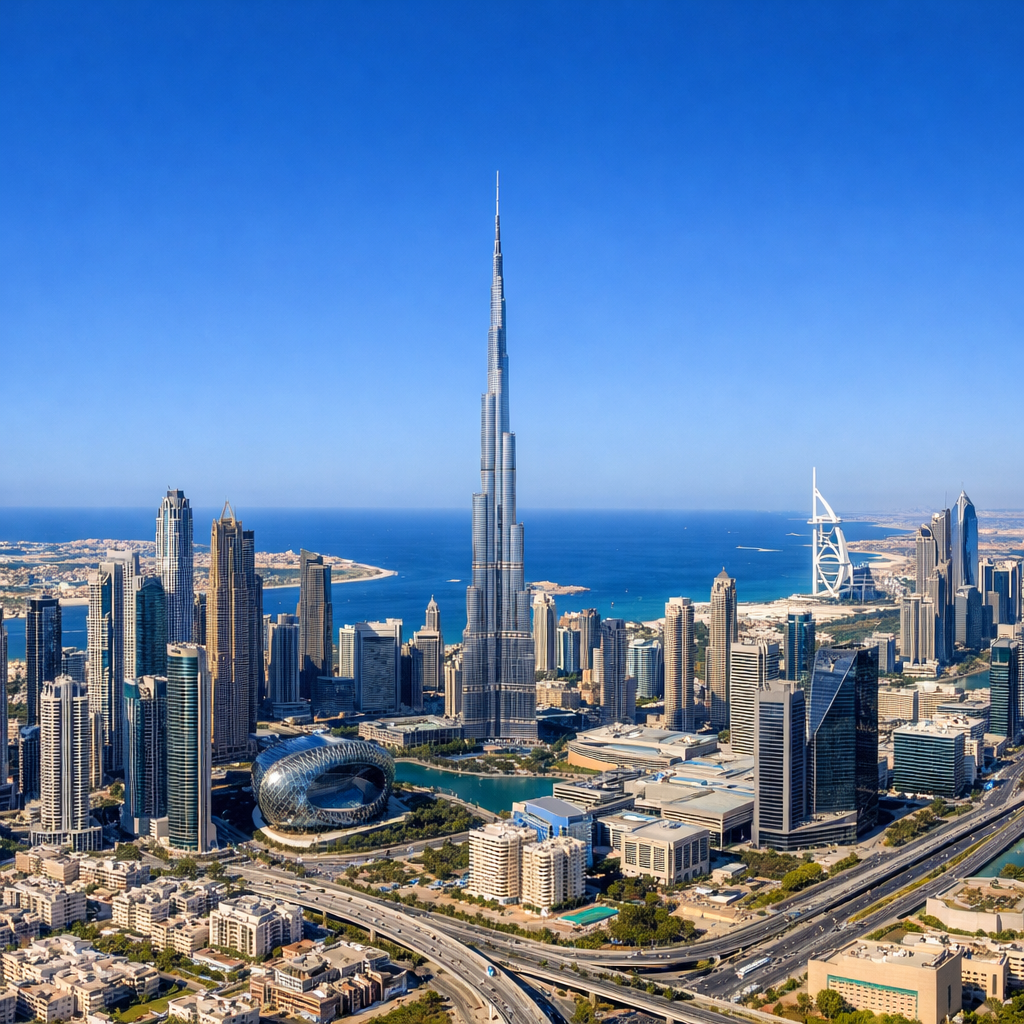
Dubai’s climate is characterized by its hot desert environment, marked by two primary seasons: a long, intense summer and a short, mild winter. Understanding these patterns is essential for residents and visitors alike.
Summer: Intense Heat and High Humidity
From May to September, Dubai experiences its summer season, with daytime temperatures often exceeding 40°C (104°F). Coastal areas, including the city itself, face high humidity levels due to the proximity to the Arabian Gulf, making the heat feel even more oppressive. This combination of high temperatures and humidity can pose health risks, necessitating precautions such as staying hydrated and limiting outdoor activities during peak heat hours.
Winter: Mild and Pleasant
Between December and February, Dubai enjoys a mild winter, with daytime temperatures ranging from 20°C to 26°C (68°F to 79°F). This period is marked by clear skies and comfortable weather, making it ideal for outdoor activities. Rainfall is minimal but more likely during these months, typically occurring as short, heavy bursts.
Environmental Challenges
Dubai’s rapid urbanization and industrial activities have led to environmental challenges, notably concerning air quality. The city’s air quality is influenced by several factors:
Particulate Matter (PM2.5 and PM10)
Construction dust, vehicle emissions, and natural desert sand contribute to elevated levels of particulate matter. These fine particles can penetrate deep into the lungs, posing health risks, especially for individuals with respiratory conditions.
Nitrogen Dioxide (NO₂)
Emitted primarily from vehicle engines and industrial activities, NO₂ can irritate the airways and contribute to smog formation. Areas with heavy traffic often record higher NO₂ levels.
Ozone (O₃)
Formed when sunlight reacts with nitrogen oxides and volatile organic compounds, ozone pollution is a recurring issue during Dubai’s sunny summer months.
To mitigate these challenges, Dubai has implemented measures such as promoting electric and hybrid vehicles, enforcing dust-control regulations at construction sites, and monitoring industrial emissions. Residents are encouraged to stay informed about air quality levels and take necessary precautions, especially during periods of high pollution.
Understanding Dubai’s climate and environmental factors is crucial for adapting to the city’s conditions and ensuring a healthy living environment.