

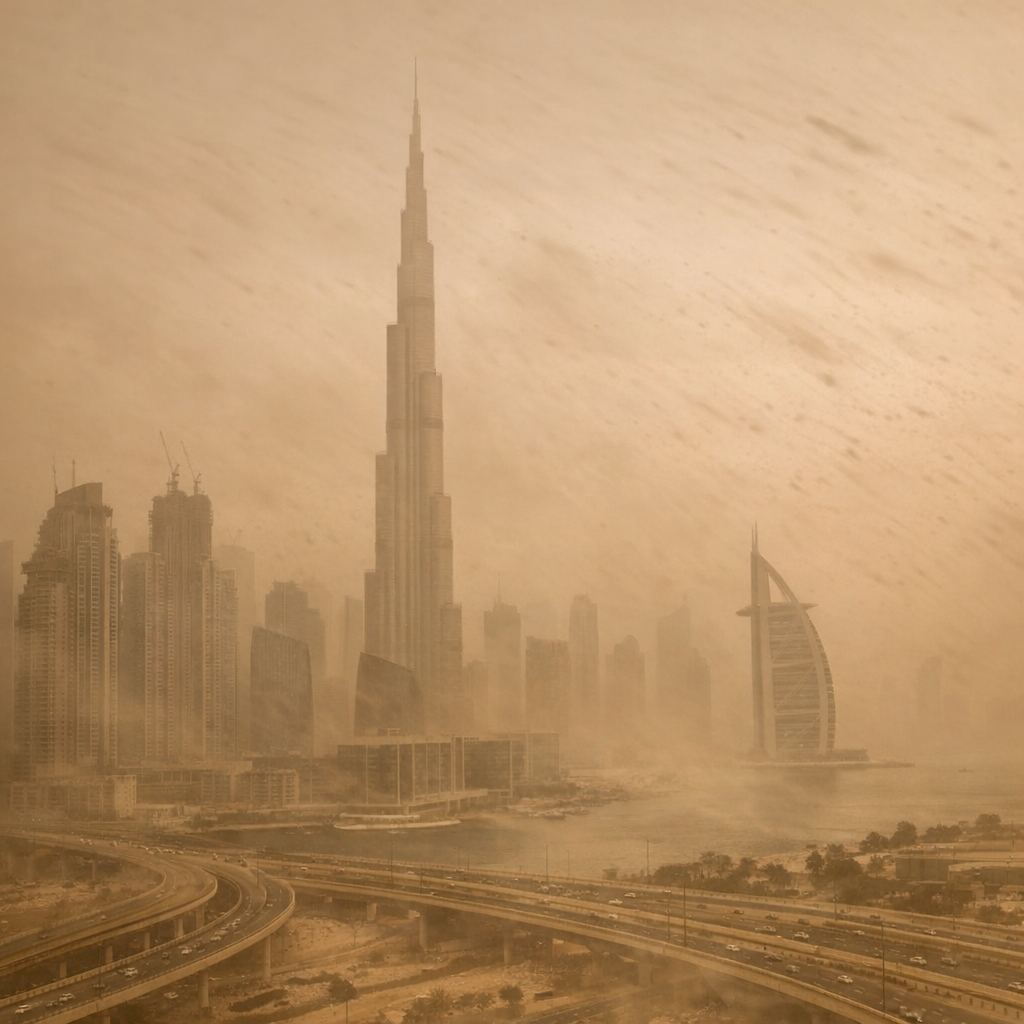
Dubai’s climate is characterized by its hot desert environment, marked by extreme temperatures, high humidity, and minimal rainfall. Understanding these patterns is essential for both residents and visitors to navigate the city’s unique weather conditions.
Seasonal Overview
Summer (June to September)
During summer, Dubai experiences intense heat, with daytime temperatures often exceeding 40°C (104°F). Coastal areas face high humidity levels, sometimes reaching 80-90%, making outdoor activities challenging. The combination of heat and humidity can result in wet-bulb temperatures approaching human survivability limits, necessitating caution during outdoor activities.
Winter (December to February)
Winter offers a respite with milder temperatures ranging from 14°C to 26°C (57°F to 79°F). This period is marked by pleasant weather, making it ideal for outdoor activities. Rainfall is rare but more likely during these months, contributing to the annual average of approximately 100 mm.
Environmental Challenges
Air Quality
Dubai’s rapid urbanization and industrial activities have led to air quality concerns. Major pollutants include particulate matter (PM2.5 and PM10) from construction dust and vehicle emissions, nitrogen dioxide from traffic, and ozone formed by chemical reactions in the atmosphere. These pollutants can cause respiratory issues, emphasizing the need for monitoring and mitigation efforts.
Sandstorms
Sandstorms, locally known as ‘Shamal,’ are common during summer. These storms, driven by strong north-westerly winds, can reduce visibility and air quality, posing challenges for transportation and outdoor activities.
Adaptation and Mitigation
To cope with these environmental challenges, Dubai has implemented various measures, including urban planning strategies to reduce heat island effects, investments in public transportation to decrease vehicle emissions, and initiatives to monitor and improve air quality. Residents and visitors are advised to stay informed about weather conditions, especially during extreme heat or sandstorms, and to take necessary precautions to ensure health and safety.
Understanding Dubai’s climate and environmental challenges is crucial for adapting to its conditions and contributing to the city’s sustainability efforts.