

Dubai’s climate is characterized by its hot desert environment, offering residents and visitors two primary seasons: a long, intense summer and a mild, pleasant winter. Understanding these patterns is essential for planning activities and mitigating environmental challenges.
Seasonal Overview
Summer (May to September)
During the summer months, Dubai experiences extreme heat, with daytime temperatures often exceeding 45°C (113°F). Humidity levels can reach up to 90%, especially near the coast, creating a challenging environment for outdoor activities. The combination of high temperatures and humidity can make the heat feel even more oppressive.
Winter (November to March)
Winter brings a welcome respite, with daytime temperatures ranging between 20°C (68°F) and 26°C (79°F). Evenings can be cooler, occasionally dropping to 14°C (57°F). This period is also when Dubai receives the majority of its minimal annual rainfall, averaging around 100 mm, primarily between December and March.
Environmental Challenges
Sandstorms
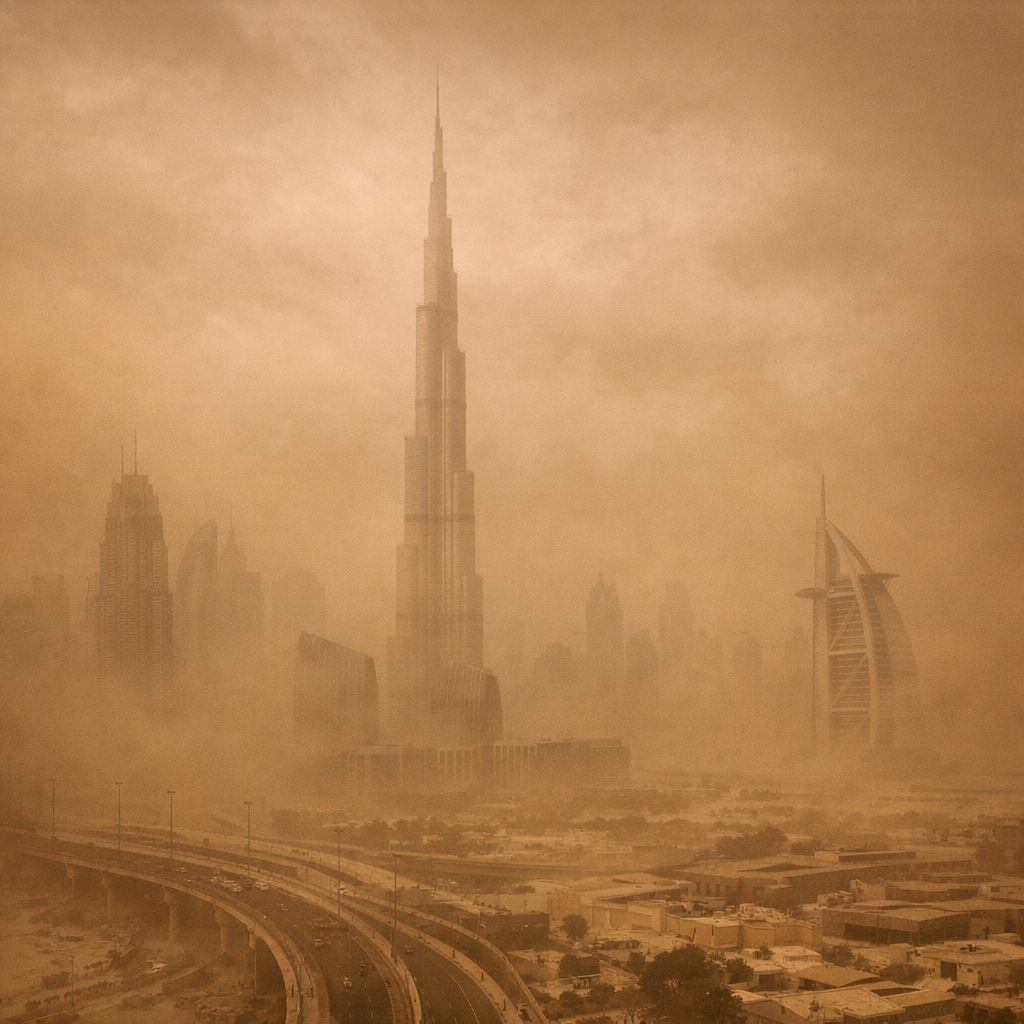
Dubai is susceptible to sandstorms, particularly during the summer months. These storms, driven by strong northwesterly winds known as ‘Shamal,’ can reduce visibility and impact air quality. Residents are advised to stay indoors during severe sandstorms and take necessary precautions to protect their health.
Air Quality
Air quality in Dubai can be affected by various factors, including vehicle emissions, industrial activities, and construction dust. The best air quality is typically recorded in December and January, following periods of rain or cooler weather. However, during the summer, increased dust and pollutants can lead to higher Air Quality Index (AQI) levels, posing health risks, especially for individuals with respiratory conditions.
Adapting to the Climate
To navigate Dubai’s climate effectively, it’s advisable to plan outdoor activities during the cooler months and stay hydrated during the hotter periods. Utilizing air-conditioned spaces and wearing appropriate clothing can also help mitigate the effects of extreme temperatures.
By understanding Dubai’s seasonal patterns and environmental challenges, residents and visitors can make informed decisions to ensure their comfort and well-being throughout the year.