

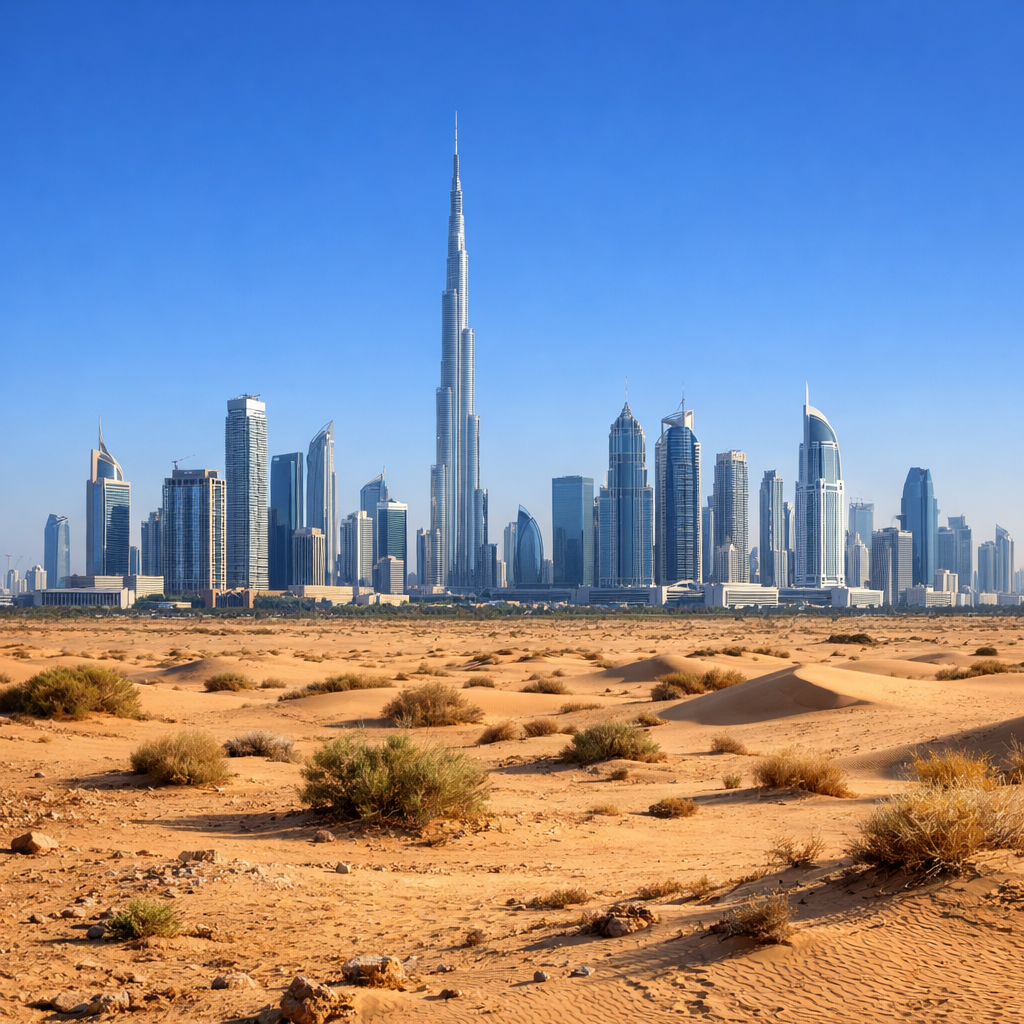
Dubai’s climate is characterized by its hot desert conditions, with two primary seasons: a long, intense summer and a short, mild winter. Understanding these patterns is essential for residents and visitors alike.
Seasonal Overview
Summer (May to September)
During the summer months, Dubai experiences extreme heat, with daytime temperatures often exceeding 40°C (104°F). Coastal areas face high humidity levels, sometimes surpassing 70%, making the heat feel even more oppressive. These conditions can pose health risks, emphasizing the importance of staying hydrated and limiting outdoor activities during peak heat hours.
Winter (December to February)
Winter offers a respite from the heat, with daytime temperatures ranging between 20°C (68°F) and 26°C (79°F). Nights can be cooler, occasionally dropping to 14°C (57°F). This season is ideal for outdoor activities and tourism, as the weather is more comfortable and rainfall is minimal.
Environmental Challenges
Water Scarcity
Dubai’s arid climate results in minimal annual rainfall, averaging around 100 mm. This scarcity necessitates reliance on energy-intensive desalination processes to meet water demands, highlighting the importance of water conservation efforts.
Air Quality
Rapid urbanization and industrial activities have led to concerns about air quality. The UAE has been identified as one of the most polluted countries globally based on PM2.5 concentrations, which can pose health risks, particularly for individuals with respiratory conditions.
Sandstorms
Seasonal sandstorms, known locally as ‘Shamal,’ can reduce visibility and affect daily life. These storms are more common during the summer months and can last for several days, emphasizing the need for preparedness and caution during such events.
Understanding Dubai’s climate and associated environmental challenges is crucial for adapting to its unique conditions and promoting sustainable living practices.