

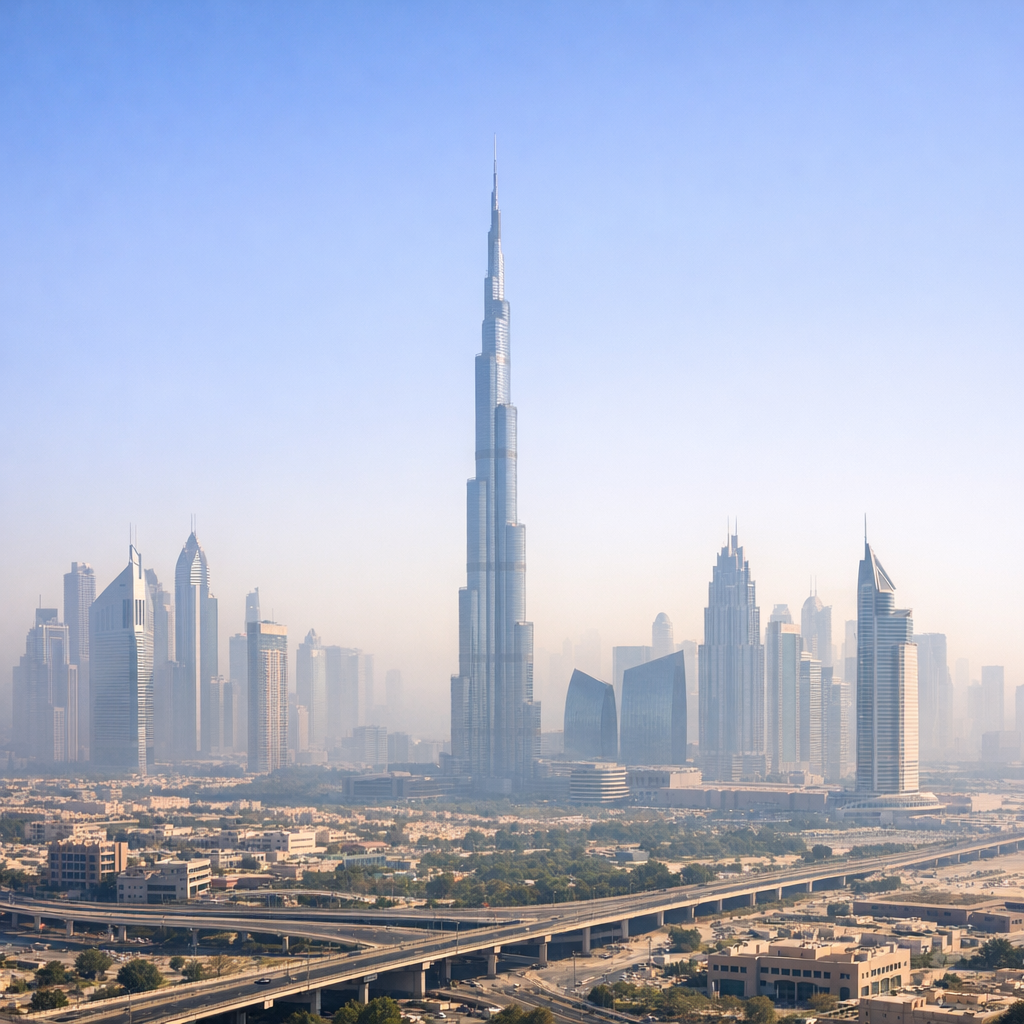
Dubai’s climate is characterized by its hot desert environment, leading to distinct seasonal patterns and environmental challenges. Understanding these factors is essential for residents and visitors alike.
Seasonal Weather Patterns
Summer (May to September)
During the summer months, Dubai experiences intense heat, with average daytime temperatures ranging from 40°C to 45°C. Humidity levels can be high, especially near the coast, making outdoor activities challenging. It’s advisable to stay hydrated and limit sun exposure during peak hours.
Winter (November to March)
Winter brings milder temperatures, with daytime averages between 24°C and 31°C. This season is ideal for outdoor activities, as the weather is more comfortable and rainfall is minimal.
Environmental Challenges
Water Scarcity
Dubai’s arid climate results in limited natural freshwater resources. The city relies heavily on desalination processes to meet its water needs, which can have environmental implications.
Air Quality
Rapid urbanization and industrial activities contribute to air pollution in Dubai. Factors such as vehicle emissions, construction dust, and industrial outputs affect air quality, particularly during the summer months.
Sandstorms
Dubai occasionally experiences sandstorms, especially during the summer. These events can reduce visibility and air quality, posing challenges for transportation and outdoor activities.
Understanding Dubai’s climate and environmental challenges is crucial for planning daily activities and long-term strategies to mitigate environmental impacts.