

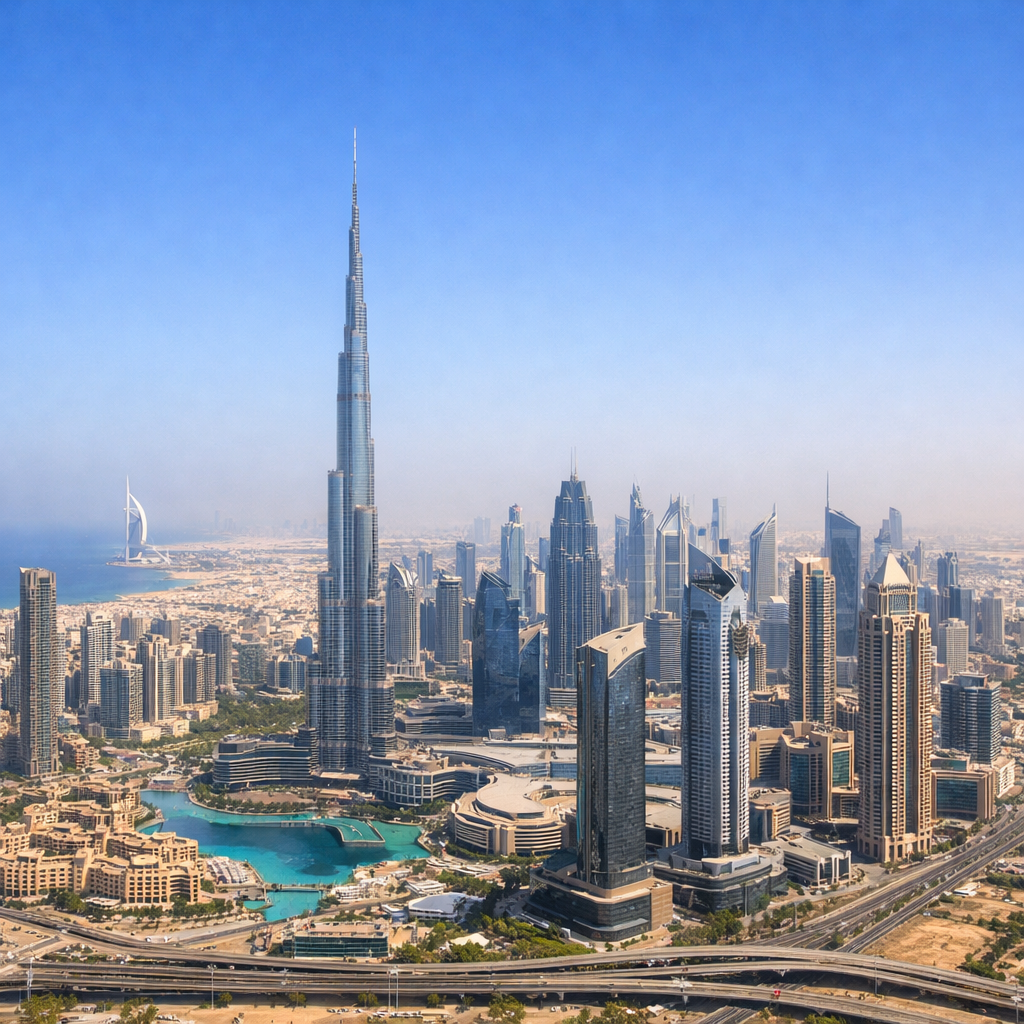
Dubai’s climate is characterized by its hot desert environment, marked by extreme temperatures and minimal rainfall. Understanding these patterns is essential for both residents and visitors to navigate the city’s weather conditions effectively.
Seasonal Overview
Summer (May to September)
During the summer months, Dubai experiences intense heat, with daytime temperatures often exceeding 40°C (104°F). Coastal areas, including Dubai, combine high temperatures with elevated humidity from the Arabian Gulf, amplifying perceived heat stress. This combination can make outdoor activities challenging, and it’s advisable to limit exposure during peak heat hours.
Winter (December to February)
Winter offers a respite from the heat, with daytime temperatures ranging between 20°C (68°F) and 26°C (79°F). Evenings can be cooler, occasionally dropping to 14°C (57°F). This period is ideal for outdoor activities, as the weather is more temperate and comfortable.
Environmental Challenges
Sandstorms
Dubai occasionally experiences sandstorms, driven by strong north-westerly winds known as ‘Shamal.’ These storms can reduce visibility and coat the city in fine desert dust, impacting daily life and health. It’s advisable to stay indoors during severe sandstorms and ensure that homes are sealed to prevent dust ingress.
Air Quality
Air pollution is a concern in Dubai, with the city ranking among the most polluted globally based on PM2.5 concentrations. These fine particulate matters can penetrate deep into the lungs, increasing the risk of respiratory and cardiovascular illnesses. Residents are encouraged to monitor air quality indices and take necessary precautions, especially during high pollution days.
Adaptation and Mitigation Efforts
Recognizing these challenges, Dubai has initiated several measures to adapt to its climate and mitigate environmental issues. The city is expanding its storm-water infrastructure to handle rare but intense rainfall events and is increasing green spaces to create cooler microclimates. Additionally, efforts are underway to reduce carbon emissions and transition towards more sustainable energy sources.
Understanding Dubai’s climate and environmental challenges is crucial for making informed decisions about daily activities and long-term planning. By staying informed and taking appropriate precautions, residents and visitors can better navigate the unique weather patterns of this vibrant city.