

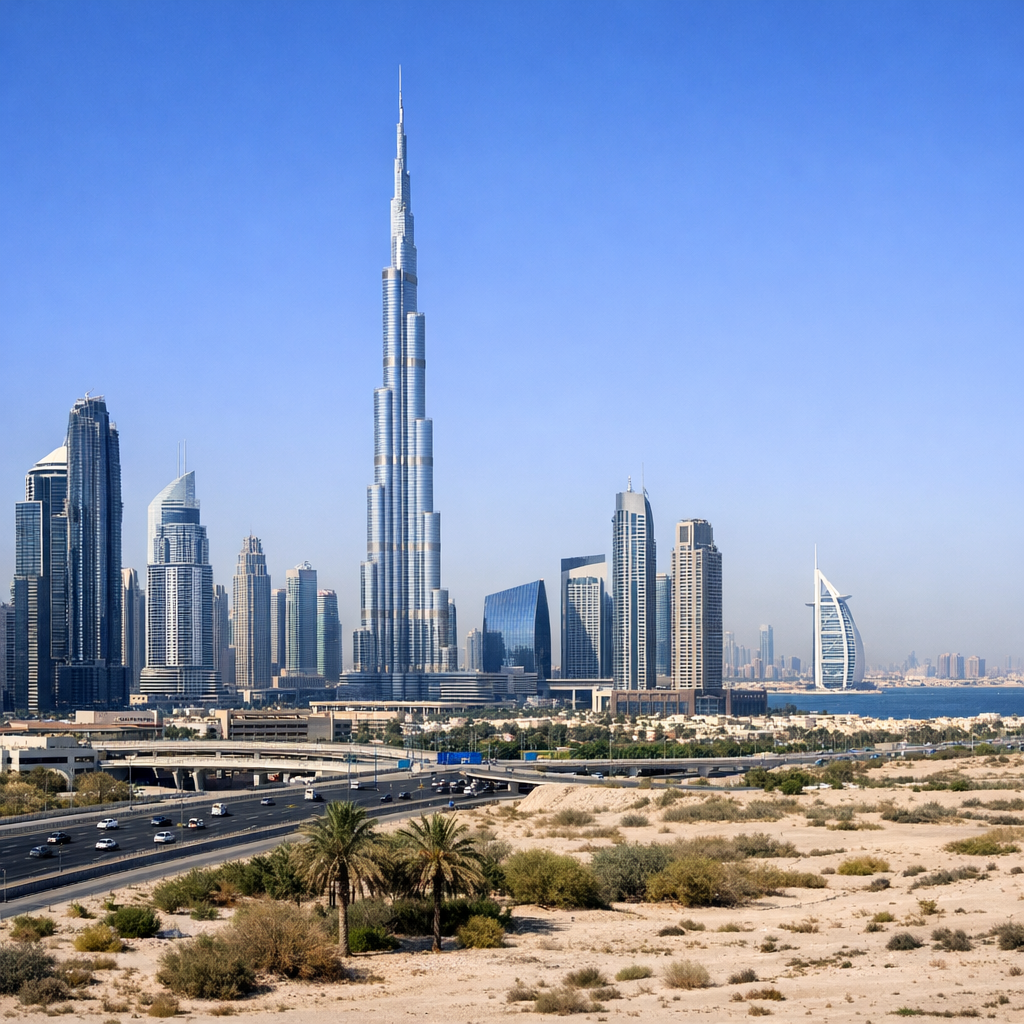
Dubai’s climate is characterized by two primary seasons: a long, hot summer and a mild, pleasant winter. Understanding these patterns is essential for residents and visitors alike.
Seasonal Overview
Summer (May to September)
During the summer months, Dubai experiences intense heat, with daytime temperatures often ranging between 38°C and 48°C (100°F to 118°F). Humidity levels are high, making outdoor activities challenging. It’s advisable to stay hydrated and limit sun exposure during peak hours.
Winter (November to March)
Winter brings more comfortable conditions, with daytime temperatures averaging between 20°C and 32°C (68°F to 90°F). This season is ideal for outdoor activities, as the weather is mild and rainfall is minimal.
Environmental Considerations
Water Scarcity
Dubai faces significant water scarcity due to its arid climate and limited freshwater resources. The city relies heavily on desalination plants to meet its water needs. However, desalination is energy-intensive and has environmental implications, such as the release of brine into the Arabian Gulf, affecting marine ecosystems.
Urban Heat Island Effect
The rapid urbanization of Dubai has led to the urban heat island effect, where urban areas experience higher temperatures than their rural surroundings. This phenomenon is due to the extensive use of concrete and asphalt, which absorb and retain heat. To mitigate this effect, incorporating green spaces and reflective building materials is recommended.
Adapting to Dubai’s Climate
To comfortably navigate Dubai’s climate, it’s important to plan activities according to the seasons. During the summer, prioritize indoor activities and ensure adequate hydration. In the winter, take advantage of the pleasant weather by engaging in outdoor pursuits. Additionally, staying informed about environmental issues can help residents and visitors make sustainable choices that contribute to the city’s well-being.