

Dubai’s climate is characterized by its hot desert conditions, with distinct seasonal variations that influence daily life and the environment.
Seasonal Weather Patterns
Summer (May to October)
During the summer months, Dubai experiences intense heat, with daytime temperatures often exceeding 40°C (104°F). Coastal areas face high humidity levels, sometimes reaching 80-90%, which can make outdoor activities challenging. The combination of heat and humidity can push the heat index beyond 50°C (122°F) in July and August.
Winter (November to April)
Winter brings milder temperatures, with daytime highs ranging from 24°C to 31°C (75°F to 88°F). This season is marked by clear skies and cooler evenings, making it the most comfortable period for outdoor activities. Rainfall is rare, totaling 80-100mm annually and falling almost entirely between December and March across 10-15 rainy days per year.
Environmental Challenges
Air Quality
Dubai’s rapid urbanization and industrial activities have led to air quality concerns. Major pollutants include particulate matter (PM2.5 and PM10) from construction dust and vehicle emissions, nitrogen dioxide (NO₂) from traffic, and ozone (O₃) formed by chemical reactions in the atmosphere. These pollutants can cause respiratory issues and other health problems.
Sandstorms
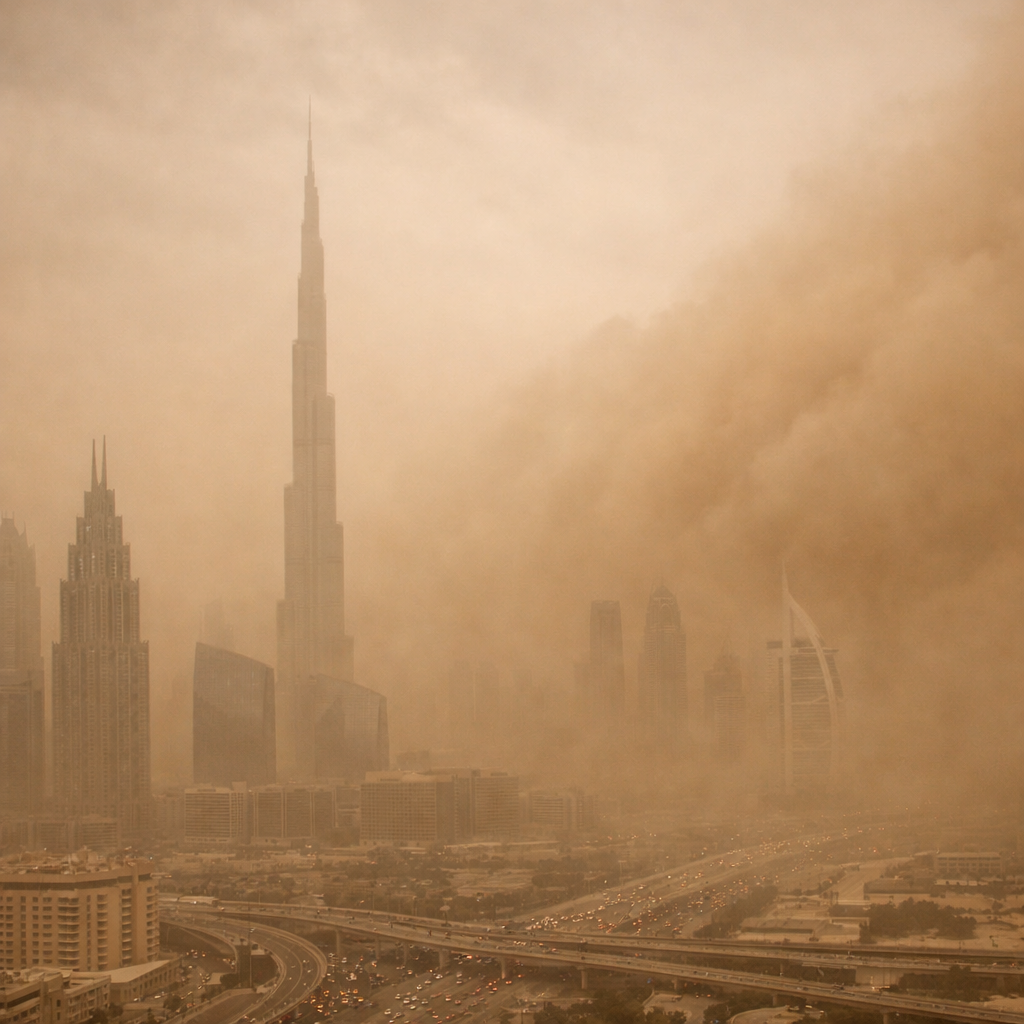
Sandstorms, locally known as ‘Shamal,’ are common during the summer. These storms, driven by strong north-westerly winds, can reduce visibility and deposit fine desert dust across the city. Residents are advised to stay indoors during severe sandstorms to avoid respiratory issues.
Water Scarcity
As a desert city, Dubai faces challenges related to water scarcity. The region’s arid climate results in minimal rainfall, making sustainable water management crucial for the city’s future.
Understanding Dubai’s climate and environmental challenges is essential for residents and visitors to adapt and thrive in this unique environment.