

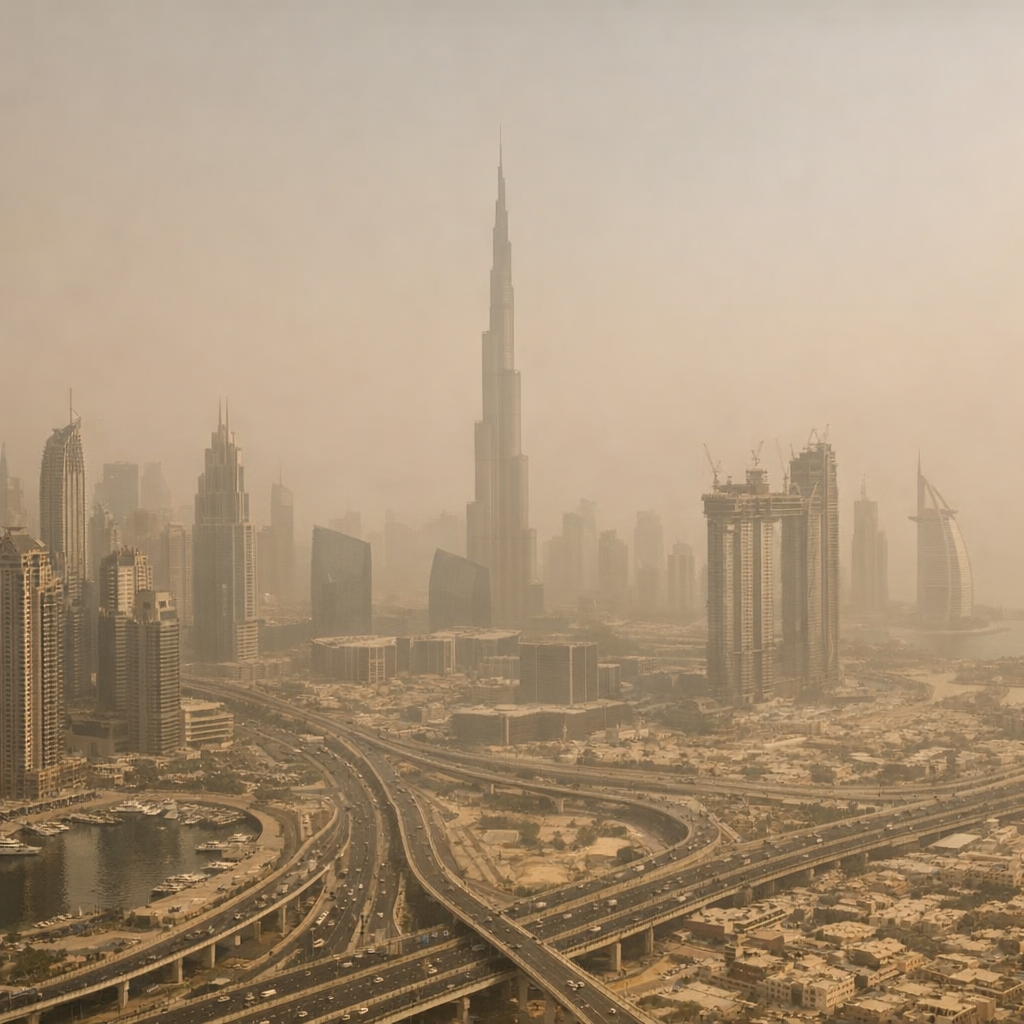
Dubai’s climate is characterized by its hot desert environment, with distinct seasonal variations that influence daily life and the city’s environmental landscape.
Seasonal Weather Patterns
Summer (May to September)
During the summer months, Dubai experiences intense heat, with daytime temperatures often exceeding 40°C (104°F). High humidity levels, especially near the coast, can make the heat feel even more oppressive. The combination of heat and humidity can lead to the formation of ground-level ozone, a secondary pollutant that affects air quality. Additionally, the region is susceptible to dust and sandstorms, locally known as ‘shamal’ winds, which can reduce visibility and impact respiratory health.
Winter (November to April)
Winter brings milder temperatures, ranging from 20°C to 26°C (68°F to 79°F), making it the most comfortable period for outdoor activities. This season also sees the majority of the annual rainfall, though precipitation remains sparse and irregular. Occasional heavy rains can lead to flash flooding due to the city’s infrastructure and the desert terrain’s limited absorption capacity.
Environmental Challenges
Air Quality
Dubai’s air quality is influenced by both natural and human-made factors. Dust storms contribute significantly to particulate matter in the air. Additionally, rapid urbanization and industrial activities release pollutants, further degrading air quality. The city’s reliance on vehicular transportation adds to the emission of nitrogen oxides and volatile organic compounds, which can react in sunlight to form ground-level ozone.
Water Scarcity
As an arid region, Dubai faces significant water scarcity challenges. The city relies heavily on desalination plants to meet its water needs, a process that is energy-intensive and has environmental implications, such as the release of brine into the Arabian Gulf, affecting marine ecosystems. Groundwater extraction has led to the lowering of the water table and the intrusion of saline water into freshwater aquifers.
Coastal Flooding and Sea-Level Rise
Dubai’s extensive coastline makes it vulnerable to coastal flooding and the impacts of sea-level rise. Rising sea levels threaten vital infrastructures, including desalination and power facilities, and pose risks to coastal habitats along the Persian Gulf.
Adaptation and Mitigation Efforts
Recognizing these challenges, Dubai has initiated several measures to adapt to and mitigate environmental issues. The city has updated its nationally determined contribution (NDC), aiming to curb carbon emissions by 40% by 2030. Additionally, urban planning efforts focus on building resilient infrastructure, enhancing green spaces, and implementing sustainable water management practices to ensure long-term environmental sustainability.
Understanding Dubai’s climate and environmental challenges is crucial for residents and visitors alike. By staying informed and supporting sustainable initiatives, the community can contribute to a healthier and more resilient city.