

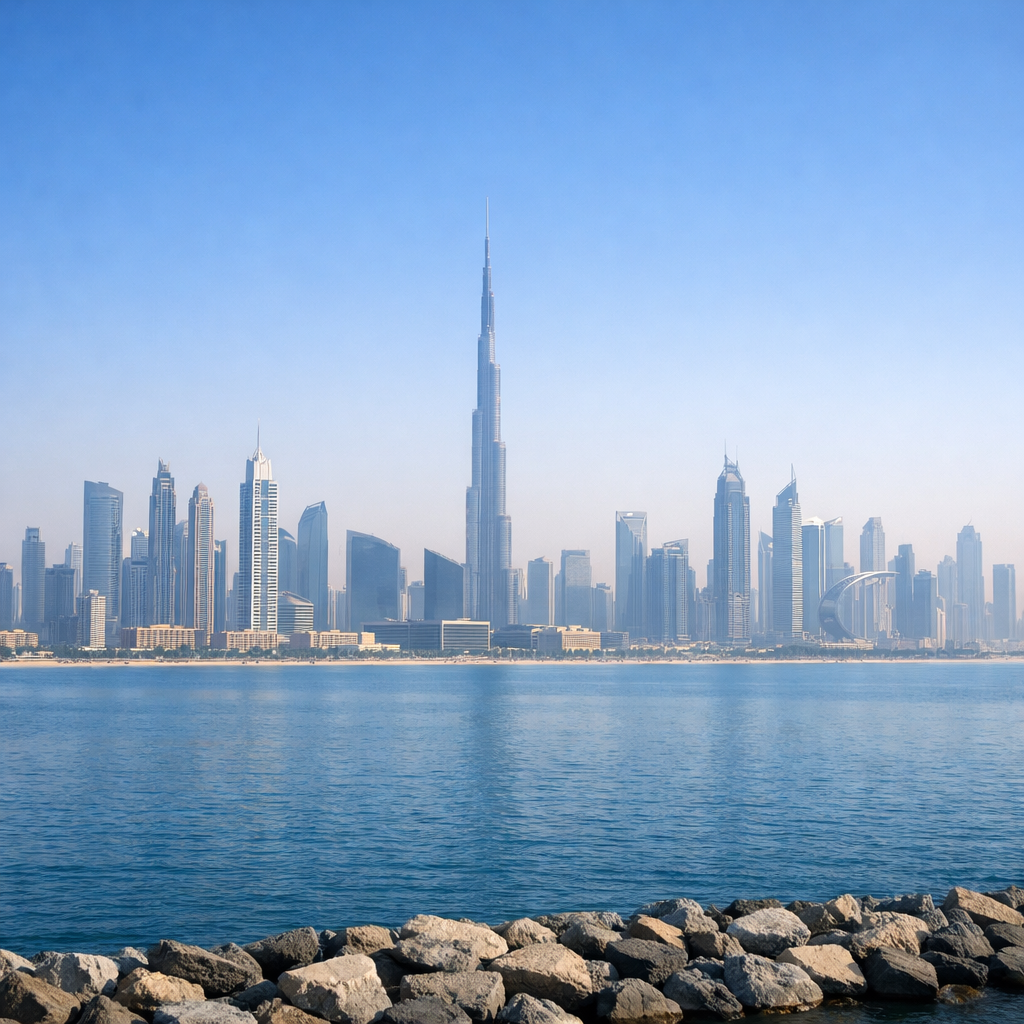
Dubai’s climate is characterized by its hot desert environment, marked by high temperatures, minimal rainfall, and abundant sunshine throughout the year. Understanding these patterns is essential for residents and visitors alike.
Seasonal Weather Patterns
Winter (December to February)
During winter, Dubai experiences mild temperatures, with daytime averages ranging from 20°C to 26°C. Nights can be cooler, occasionally dropping to 14°C. This season is also when the city receives most of its limited rainfall, typically in short, heavy bursts.
Summer (June to September)
Summers are intensely hot, with daytime temperatures often exceeding 40°C and sometimes reaching up to 50°C. High humidity levels, influenced by the warm waters of the Arabian Gulf, can make the heat feel even more oppressive. This combination of heat and humidity is a defining feature of Dubai’s summer climate.
Environmental Challenges
Sandstorms
Dubai occasionally experiences sandstorms, particularly during the summer months. These events are driven by strong north-westerly winds known as ‘Shamal’ winds, which pick up loose sand and dust from the desert, reducing visibility and affecting air quality. Such storms can last for days and are more frequent between June and September.
Air Quality
Air quality in Dubai can be affected by various factors, including vehicle emissions, industrial activities, and construction dust. The best air quality is typically recorded in December and January, following periods of rain or cooler weather. However, during the summer months, the combination of high temperatures, humidity, and dust can lead to poorer air quality.
Adaptation and Preparedness
Given these climatic conditions, it’s important for residents and visitors to take appropriate measures. During the summer, staying hydrated, wearing light clothing, and limiting outdoor activities during peak heat hours are advisable. Awareness of weather forecasts, especially regarding potential sandstorms, can help in planning daily activities and ensuring safety.
Understanding Dubai’s climate and environmental challenges is crucial for adapting to its unique conditions and ensuring a comfortable and safe experience in the city.