

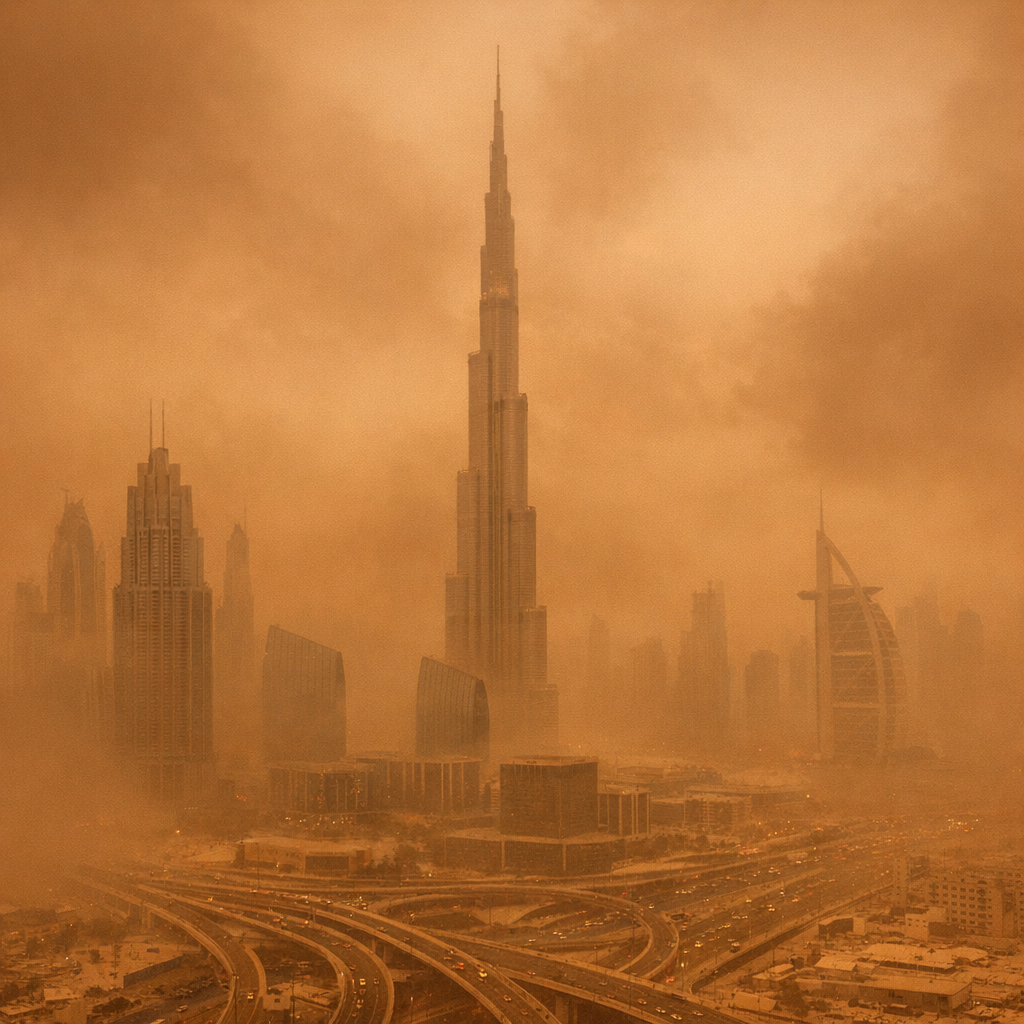
Dubai’s climate is characterized by its hot desert environment, with distinct seasonal variations and environmental challenges that residents and visitors should be aware of.
Seasonal Overview
Summer (May to September)
During the summer months, Dubai experiences intense heat, with daytime temperatures often exceeding 40°C (104°F). Humidity levels are also high, making outdoor activities challenging. It’s advisable to stay hydrated and limit exposure to the sun during peak hours.
Winter (November to March)
Winter brings milder temperatures, ranging from 18°C to 30°C (64°F to 86°F), providing a more comfortable environment for outdoor activities. This period also sees the majority of the city’s minimal annual rainfall, averaging around 100 mm.
Environmental Challenges
Sandstorms
Dubai occasionally experiences sandstorms, particularly during the summer months. These storms, driven by strong north-westerly winds known as ‘shamal,’ can reduce visibility and affect air quality. It’s important to stay indoors during severe sandstorms and keep windows and doors closed to minimize exposure to dust.
Air Quality
Air quality in Dubai can be influenced by various factors, including vehicle emissions, industrial activities, and natural events like sandstorms. Residents are encouraged to monitor air quality indices and take necessary precautions, especially those with respiratory conditions.
Staying Informed
Understanding Dubai’s climate and environmental challenges is essential for planning daily activities and ensuring personal well-being. Staying informed through reliable weather forecasts and adhering to safety guidelines can help mitigate the impacts of extreme weather conditions.