

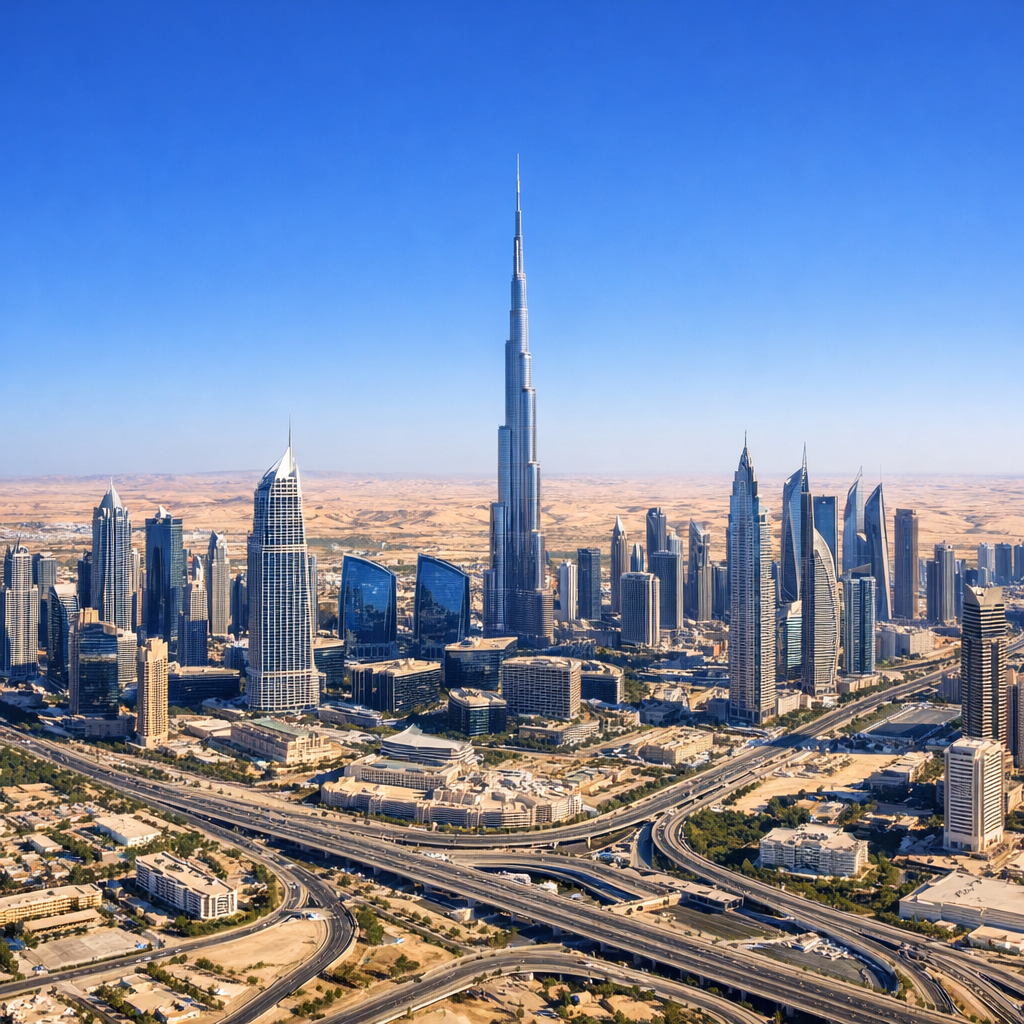
Dubai’s climate is characterized by its hot desert conditions, with distinct seasonal variations that influence daily life and the environment.
Seasonal Weather Patterns
Summer (May to September)
During the summer months, Dubai experiences intense heat, with daytime temperatures often exceeding 40°C (104°F). Coastal areas face high humidity levels, sometimes reaching 80-90%, making outdoor activities challenging. Inland regions, while slightly less humid, can see temperatures soaring up to 45°C (113°F). The combination of heat and humidity can result in wet-bulb temperatures approaching the human survivability limit of 35°C, making outdoor activity dangerous.
Winter (December to February)
Winter offers a respite from the heat, with daytime temperatures ranging between 20°C (68°F) and 26°C (79°F). Nights can be cooler, occasionally dropping to 14°C (57°F). This period is also when Dubai receives most of its minimal annual rainfall, averaging around 100 mm, primarily between December and March.
Environmental Challenges
Sandstorms
Dubai is susceptible to sandstorms, especially during the summer. These are often driven by strong north-westerly shamal winds, which can reduce visibility and coat the city in fine desert dust. Such storms can last for days, prompting residents to stay indoors and affecting daily activities.
Air Quality
Air quality in Dubai is influenced by both natural and human factors. High temperatures and humidity can exacerbate the effects of pollutants, leading to health concerns. The city has been identified as having significant levels of air pollution, with fine particulate matter (PM2.5) concentrations posing risks to respiratory and cardiovascular health.
Climate Change Impacts
Dubai faces vulnerabilities due to climate change, including extreme heat, water scarcity, and rising sea levels. These challenges have implications for infrastructure, public health, and the environment. The UAE has committed to reducing carbon emissions by 40% by 2030 to mitigate these effects.
Understanding Dubai’s climate and its associated environmental challenges is essential for residents and visitors to navigate the city’s unique conditions effectively.