

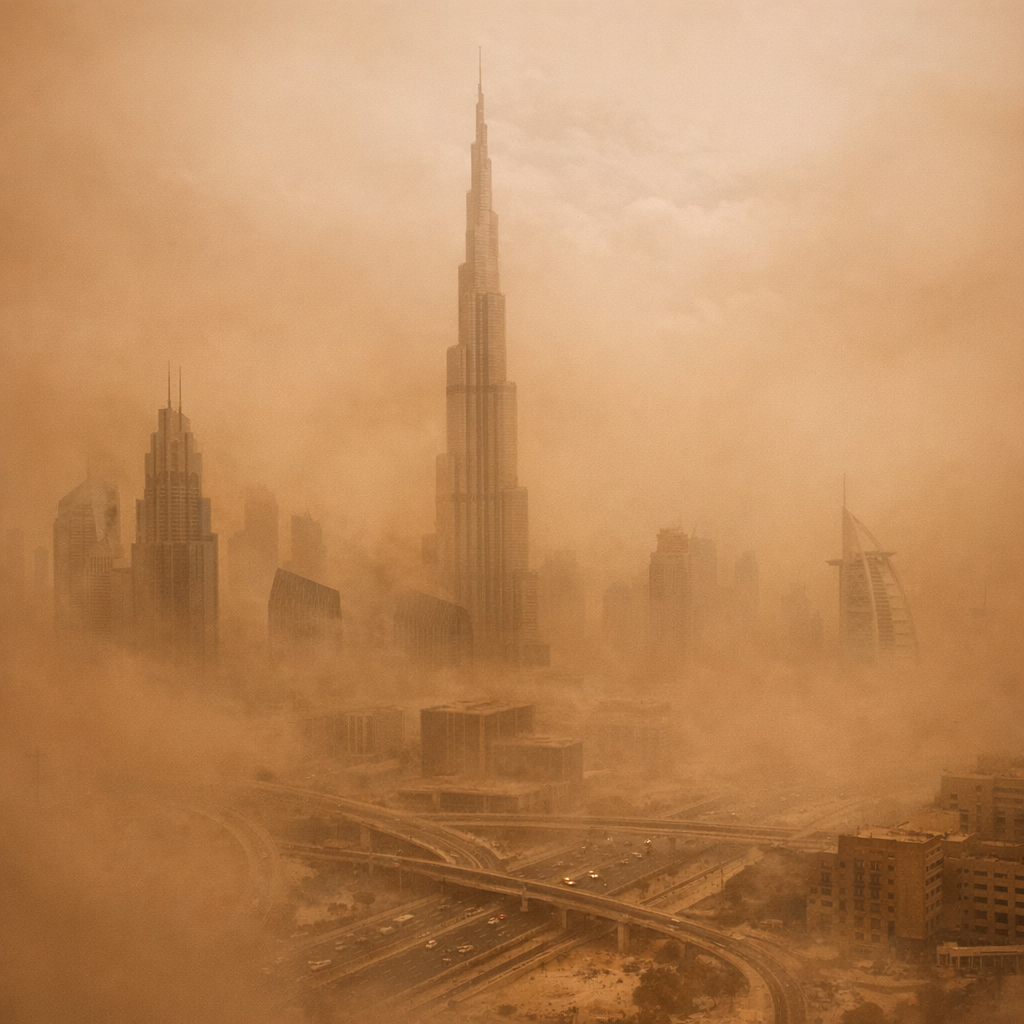
Dubai’s climate is characterized by its hot desert conditions, with two primary seasons: a long, intense summer and a short, mild winter. Understanding these patterns is essential for residents and visitors alike.
Seasonal Weather Patterns
Summer (May to September)
During the summer months, Dubai experiences scorching temperatures, often exceeding 45°C (113°F). Humidity levels can reach up to 90%, especially near the coast, making outdoor activities challenging. The combination of high heat and humidity occasionally pushes the wet-bulb temperature close to the human survivability limit of 35°C, posing health risks such as heatstroke and dehydration.
Winter (November to March)
In contrast, winter offers a respite with daytime temperatures ranging from 20°C to 26°C (68°F to 79°F) and cooler evenings. This period is marked by clear skies and minimal rainfall, averaging around 100 mm annually, primarily between December and March. However, the city’s infrastructure can be susceptible to flash flooding during rare intense rainfall events.
Environmental Challenges
Sandstorms
Dubai is occasionally affected by sandstorms, locally known as ‘shamal’ winds, which originate from the northwest. These storms can reduce visibility to near zero and coat the city in fine desert dust, impacting daily life and health. Sandstorms are more frequent during the summer months but can occur at other times of the year as well.
Water Scarcity
With virtually no natural freshwater sources, Dubai relies heavily on desalination plants to meet its water needs. The city’s rapid growth and high per capita water consumption place significant demands on these facilities, raising concerns about long-term sustainability and environmental impact.
Adaptation and Mitigation Efforts
Recognizing these challenges, Dubai has implemented various measures to adapt to its harsh climate and mitigate environmental risks. These include investing in sustainable infrastructure, promoting water conservation initiatives, and enhancing early warning systems for extreme weather events. Additionally, the city has committed to reducing carbon emissions by 40% by 2030, aiming to address the broader implications of climate change.
Understanding Dubai’s unique climate and environmental challenges is crucial for developing effective strategies to ensure the city’s resilience and sustainability in the face of ongoing climatic shifts.