

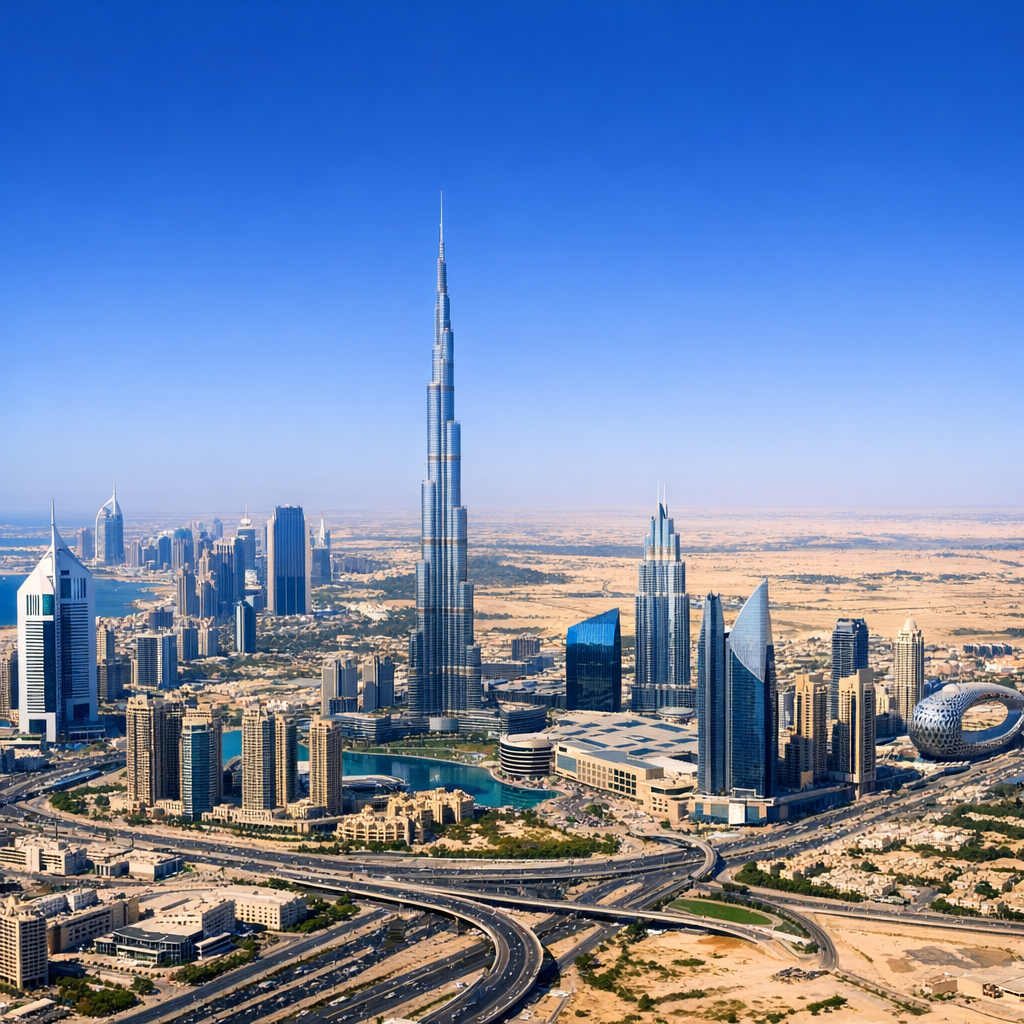
Dubai’s climate is characterized by its hot desert environment, with distinct seasonal variations that influence daily life and the natural surroundings.
Seasonal Weather Patterns
Summer (May to September)
During the summer months, Dubai experiences intense heat, with daytime temperatures often exceeding 40°C (104°F). High humidity levels, especially in coastal areas, can make the heat feel even more oppressive. These conditions are typical of the region’s desert climate.
Winter (November to March)
In contrast, the winter season offers milder temperatures, ranging from 20°C to 26°C (68°F to 79°F). This period is marked by clear skies and minimal rainfall, making it a popular time for outdoor activities and tourism.
Environmental Challenges
Sandstorms
Dubai is occasionally affected by sandstorms, particularly during the summer months. These storms, driven by strong winds, can reduce visibility and impact air quality. Residents are advised to stay indoors during severe sandstorms and take necessary precautions to protect their health.
Water Scarcity
As a desert city, Dubai faces challenges related to water scarcity. The limited natural freshwater resources necessitate reliance on desalination processes to meet the water demands of the growing population and economy.
Air Quality
Urbanization and industrial activities contribute to air pollution in Dubai. Factors such as vehicle emissions, construction dust, and industrial outputs can affect air quality, leading to health concerns for residents. Efforts are ongoing to monitor and improve air quality through various environmental initiatives.
Understanding Dubai’s climate and environmental challenges is essential for residents and visitors to adapt and thrive in this unique environment.