

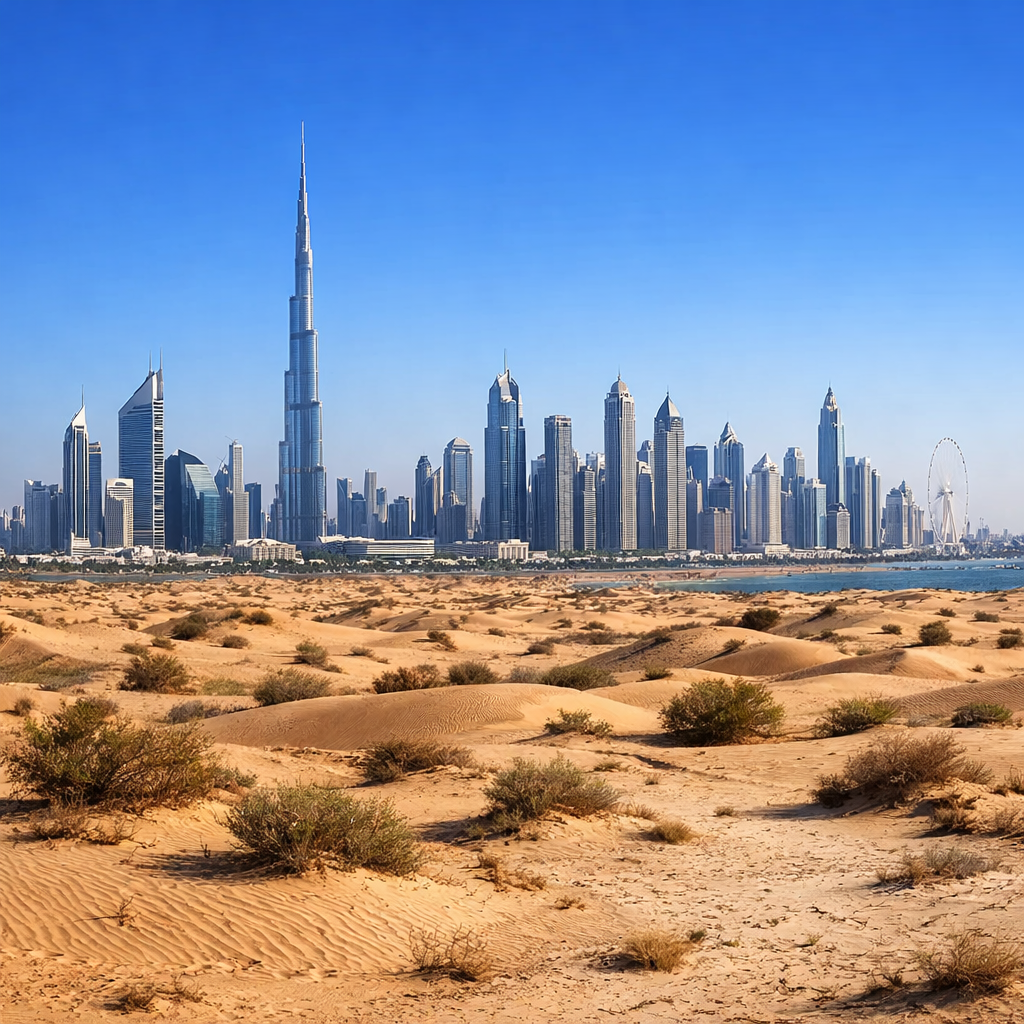
Dubai’s climate is characterized by its hot desert environment, featuring long, sweltering summers and short, mild winters. Understanding these patterns is essential for residents and visitors alike.
Seasonal Weather Patterns
Summer (May to September)
During summer, daytime temperatures often exceed 40°C, with peak afternoons reaching up to 45°C. Coastal areas experience high humidity due to the Arabian Gulf, making the heat feel more intense. This combination of heat and humidity can lead to discomfort and health risks if proper precautions aren’t taken.
Winter (December to February)
Winters are mild and pleasant, with daytime temperatures ranging between 20°C and 26°C. Evenings can be cooler, occasionally dropping to 14°C. This season is ideal for outdoor activities, as the weather is comfortable and rainfall is minimal.
Environmental Factors
Air Quality
Dubai’s rapid urbanization and industrial activities contribute to air pollution. Vehicle emissions, construction dust, and industrial outputs are significant sources of pollutants. The city has been ranked among the most polluted globally based on PM2.5 concentrations, which can pose health risks, especially for individuals with respiratory conditions.
Sandstorms
Strong north-westerly winds, known as ‘Shamal,’ can cause sandstorms, reducing visibility and affecting air quality. These events are more common during the summer months and can last for several days. Residents are advised to stay indoors during severe sandstorms and take necessary precautions.
Climate Change Impacts
The UAE is vulnerable to the effects of climate change, including rising temperatures, sea-level rise, and increased frequency of extreme weather events. These changes can impact water resources, agriculture, and overall public health. The government has initiated measures to mitigate these effects, such as setting targets to reduce carbon emissions and hosting international climate conferences to foster global cooperation.
Understanding Dubai’s climate and environmental factors is crucial for adapting to its unique conditions and ensuring a sustainable future for the city.