

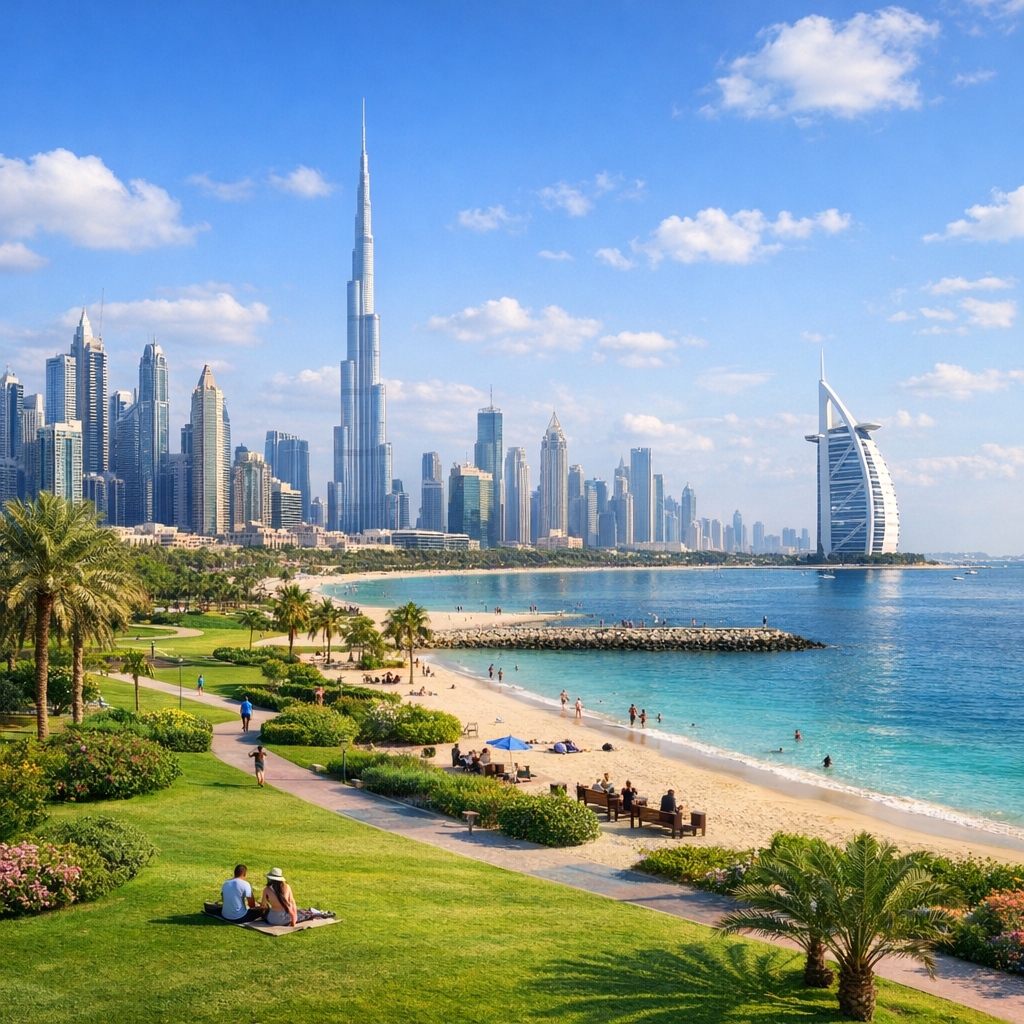
Dubai’s natural rhythm follows a simple yet dramatic pattern, one that’s essential to life here, influencing everything from our daily routines to long-term planning. From sweltering summer heat to cooler winter nights and occasional calm in between, understanding these cycles matters for every resident.
Dubai’s Seasonal Rhythm Explained
The city experiences two major climatic seasons:
- Summer (June–September): Temperatures routinely soar above 40 °C, especially in inland areas, and high humidity along the coastline adds to the perceived heat. Rainfall is rare, though clouds can roll in during major weather disruptions. The summer ocean temperature reaches its peak, influencing coast winds and fog events.
- Winter (December–March): Cooler, drier weather arrives. Daytime highs generally fall in the low to mid-20s °C, while nights, especially inland or in elevated areas, can dip significantly. Rainfall occurs mainly in this period—with thunderstorms often triggered by shifting pressure systems from nearby mountain areas or troughs off the sea. Coastal humidity tends to moderate temperature swings.
Between these two lie transitional periods (April-May and October-November), marked by rapid temperature shifts, occasional rain, and sometimes haze or fog as humidity and air pressure fluctuate.
Climate Challenges & How Dubai is Responding
Water Scarcity & Desertification
Water remains one of Dubai’s most critical environmental resources. With limited natural freshwater reservoirs, much of the city’s supply comes from desalination and treated wastewater. To preserve the delicate desert ecosystem and protect water security, national strategies aim to limit land degradation, enhance soil productivity, restore degraded land, and improve efficiency in water use—especially in agriculture and landscaping.
Green Growth & Quality of Life
Dubai’s long-term planning places growing importance on integrating nature and infrastructure. Projects such as the Blue and Green Spaces Roadmap 2030 aim to adding parks, waterfronts, and tree cover—targeting about 1.5 million new trees, dozens of new parks, and expanded beachfront paths among other amenities. These efforts are about more than aesthetics: trees help reduce urban heat, improve air quality, and support biodiversity.
Emissions, Energy & Waste
Tackling climate change means reducing greenhouse gases and rethinking how we use energy and materials. Dubai has adopted policies to increase energy and water efficiency, invest in solar energy, develop clean waste-to-energy facilities, and shift toward circular economy principles. Key targets drive these moves, such as using renewables, minimizing single-use plastics, and optimizing infrastructure like sewerage systems to cut energy demand and emissions.
What It Means for You
For residents and visitors:
- Plan your outdoor time: mornings and evenings are cooler, especially in winter and during transitional months.
- Reduce water use: every drop counts. Small choices—native landscaping, efficient fixtures—make a big difference in a desert climate.
- Think green where you can: support local parks, participate in recycling, and vote for sustainable policies in your communities.
- Keep informed: weather services track conditions like dust storms, fog, and heat advisories that can change quickly.
When weather becomes a backdrop for daily life, it also becomes a compass guiding how the city grows, how residents behave, and how policies evolve. Dubai’s climate is not just about hot summers and mild winters—it’s the foundation of a resilience story.