

By Khalid Al-Qasimi
Dubai lies in an arid, tropical desert climate, where the rhythms of weather—scorching summers, mild winters, rare rains—shape daily life and pose growing environmental risks. Below is a rundown of the characteristic climate patterns, recent shifts, and what the community and authorities are doing about them.
Climate & Seasonal Patterns
Summer runs from about late April through early October. These months see intense heat: daytime highs often reach 40-43 °C (104-110 °F), with high humidity especially near the coast making evenings feel heavy.
Winter spans roughly late October to mid-April. Temperatures during this period are much more comfortable—daytime highs averaging 22-25 °C (72-77 °F), nights dropping to 12-16 °C (54-61 °F), particularly away from the coast or in open areas. Rainfall is also concentrated in this cooler season.
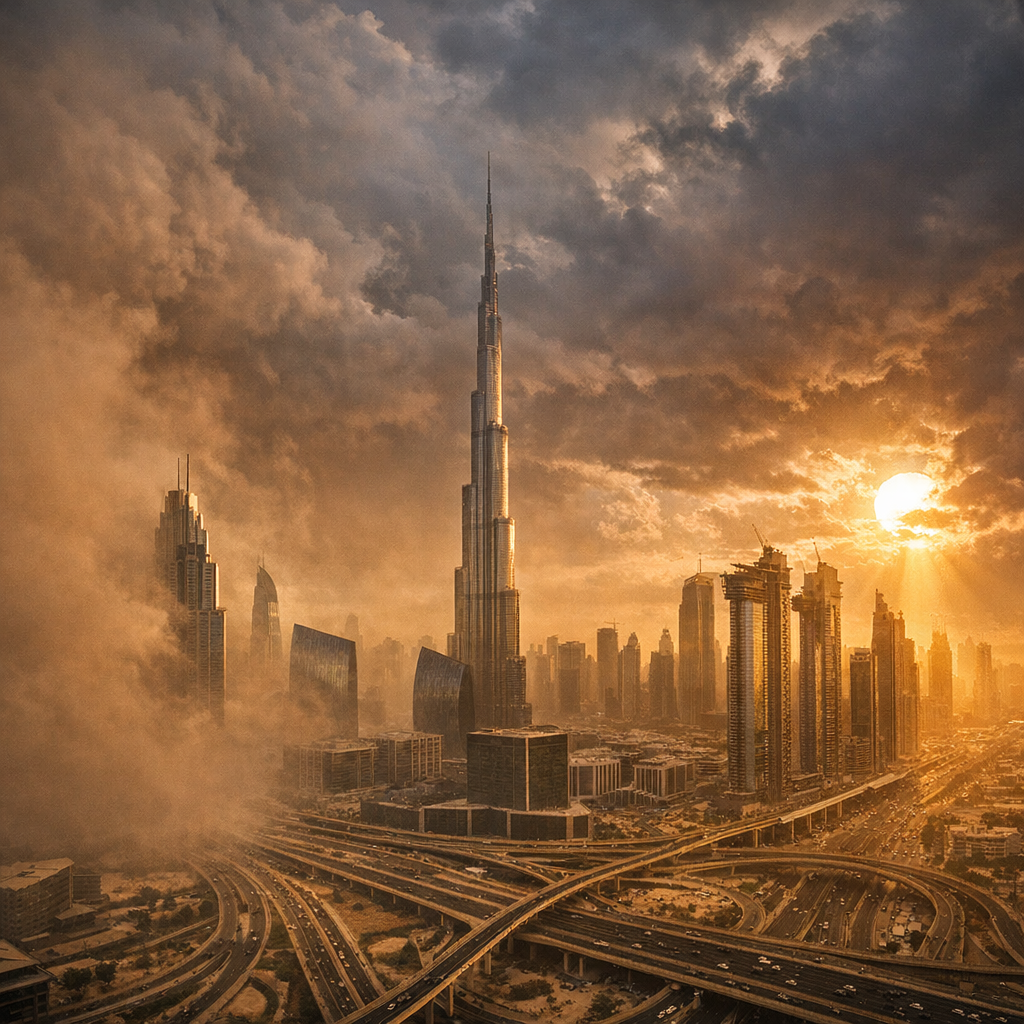
Precipitation is rare but important. Most rain falls between December and March. January tends to be the wettest month; summer months see skoraj none. Dust-storms and occasional thunderstorms punctuate both seasons.
Recent Shifts & Environmental Risks
Rising temperatures are one of the most visible changes. Summers seem to be starting earlier and staying longer. Humidity peaks can creep forward into spring, intensifying discomfort and health risks.
Extreme weather events—like heavy downpours—are becoming more unpredictable and intense. One notable example was the record rainfall in April that led to flooding in urban parts of Dubai, with analyses connecting climate change to its intensity.
Other environmental challenges include rising sea levels, desertification, and loss of wildlife habitat—all exacerbated by urban growth, high temperatures, and changing land use. Water scarcity remains a persistent concern.
Air Quality & Public Health
Air pollution is a key environmental risk in Dubai and across the UAE. Dust from deserts, vehicle emissions, construction activity, and occasional industrial sources all contribute. On some days, outdoor air quality can reach levels that are unhealthy for sensitive groups such as children, the elderly, and those with respiratory issues.
The UAE government has introduced the National Air Quality Strategy (2021-2031), which covers both outdoor and indoor air, ambient noise, and odor control. Monitoring systems have expanded, and forecasts up to three days ahead are now publicly available via the national air quality platform.
What’s Being Done & What You Can Do
Authorities are acting on multiple fronts. Policies like the UAE’s Sustainable Development Framework aim to integrate environmental protection into all sectors, while climate adaptation plans look at infrastructure, coastal zones, and extreme weather preparedness.
For residents, simple habits help: follow air quality alerts, limit outdoor activity on hot and humid days, use water and energy efficiently, and support landscaping or planting that uses native, drought-tolerant species.
Living at the Edge of Climate
Dubai’s heat, dust, rare but intense rains, and scarce water mean living here always involves a balance. As climate change shifts the edge of what’s “normal,” both community awareness and institutional action are crucial.
By understanding what the seasons usually bring—and noticing how things are changing—you can better prepare your daily routine and contribute to a healthier, more resilient city.