

By Khalid Al-Qasimi
Dubai’s climate is often described simply as “hot and desert,” but the reality is a mix of extremes and evolving conditions. From soaring summer heat and rising humidity to revitalised coastal habitats and growing air quality concerns, our city is facing both challenges and opportunities tied to weather and environment.
Climate Patterns & Heat Trends
Dubai features a tropical desert climate, with scorching summers—often exceeding 40 °C during the day and remaining hot overnight—and mild, pleasant winters with highs around 23–24 °C and lows dipping to the mid-teens. Rainfall is scarce, largely confined to winter months, though recent years have seen a slight increase in annual totals. Humidity, amplified by proximity to the Arabian Gulf, remains high year-round but peaks in winter. These patterns influence daily comfort, health risks during heat waves, and even urban infrastructure resilience.
Over two decades of urban growth have intensified the city’s surface urban heat island (SUHI) effect—dense built-up zones, especially inland, are warming faster than open or coastal areas. These heated zones can be several degrees hotter, especially at night and in winter—making cool evening breezes a rare relief for many. Cities planners are paying close attention to this trend.
Ecosystems: Mangroves & Coastal Resilience
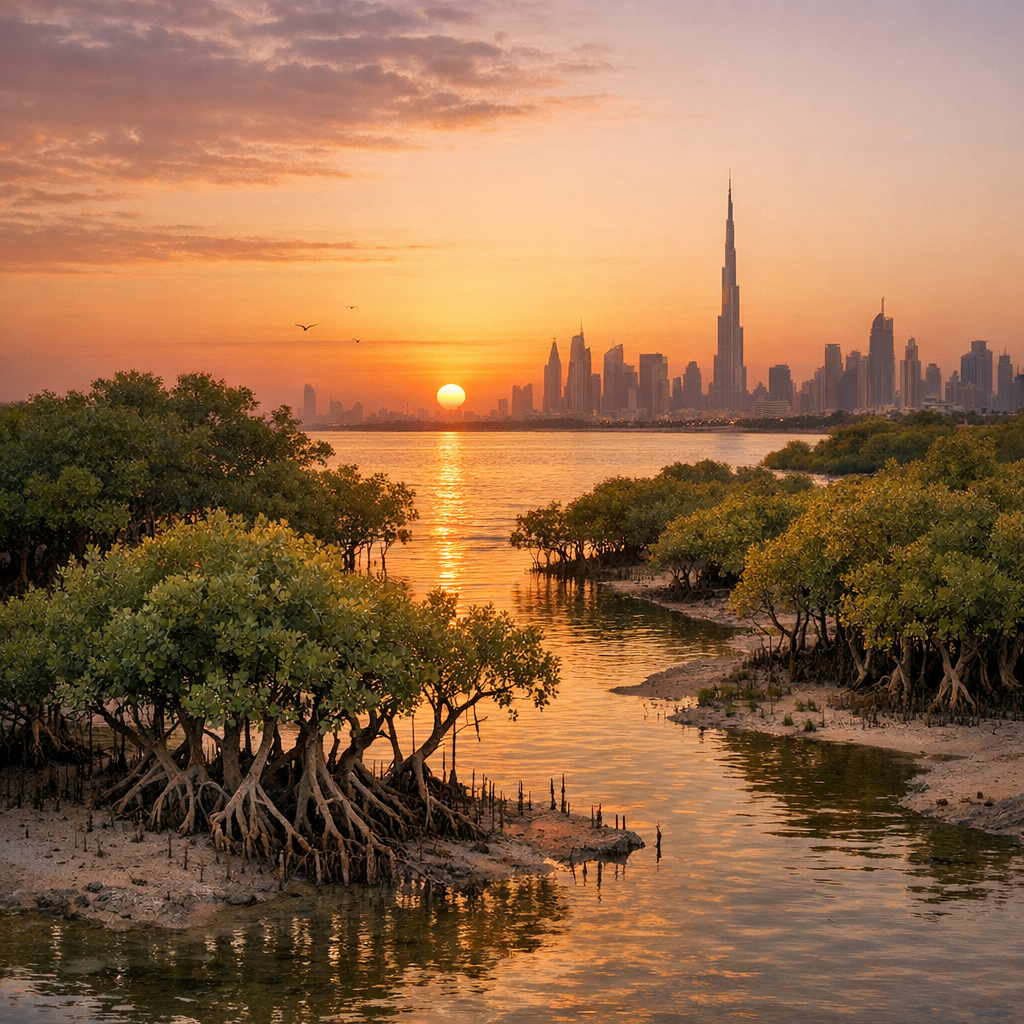
Despite harsh environmental conditions—extreme heat, high salinity, and shifting land use—Dubai and the wider UAE have made significant strides in coastal ecosystem restoration. The gray mangrove (Avicennia marina) is now the sole evergreen tree thriving in these zones of tidal fluctuation. Local restoration efforts and afforestation programmes have led to a net increase in mangrove cover, even in areas challenged by urban expansion and infrastructure development.
New tools and guidelines—such as national mangrove restoration standards and a regional monitoring toolkit—aim to make conservation more science-driven and community-inclusive. Mangrove ecosystems also provide a “blue carbon” service, sequestering substantial amounts of CO₂ and offering natural barriers against coastal erosion.
Air Quality: Summer Hazards & Health Signals
Air quality in Dubai tends to deteriorate during the hotter months (April to October), when PM2.5 levels rise—driven by dust, traffic emissions, construction, and stagnant atmospheric conditions. Those airborne particles present real concerns for health, particularly for young children, older adults, and people with respiratory conditions. Winter tends to bring cleaner air, though not always consistently.
Looking Ahead: Climate Projections & Adaptation
Projections for the UAE point toward higher overall temperatures, more frequent and intense hot-humid spells, and shifts in rainfall patterns. Sea level rise, increased humidity, and changing salinity in coastal waters are also forecast. These changes could stress marine ecosystems, damage infrastructure, challenge water resources, and exacerbate air pollution issues.
Adaptation strategies—greening urban areas, improving building design for passive cooling, expanding and preserving green and blue spaces, and developing early warning systems for extreme weather—are increasingly central to Dubai’s planning. Implementing science-based conservation, supporting sustainable water management, and fostering community awareness will be key to building resilience.
What Residents Can Do Now
- Limit outdoor exposure during extreme heat, especially in midday. Use shade, hydration, and light clothing.
- Monitor air quality via trusted apps, reduce physical activity when pollution levels spike.
- Support or volunteer with mangrove restoration or coastal conservation groups.
- Advocate for greener urban planning in your community—rooftop gardens, shaded walkways, tree cover.
- Stay informed about climate-ready infrastructure projects or guidelines adopted by city authorities.
While Dubai’s environment faces undeniable pressures, the growth in restoration efforts, scientific tools, and public awareness offers reasons for cautious optimism. Our climate may be changing, but with informed action, our city’s resilience can grow stronger.