

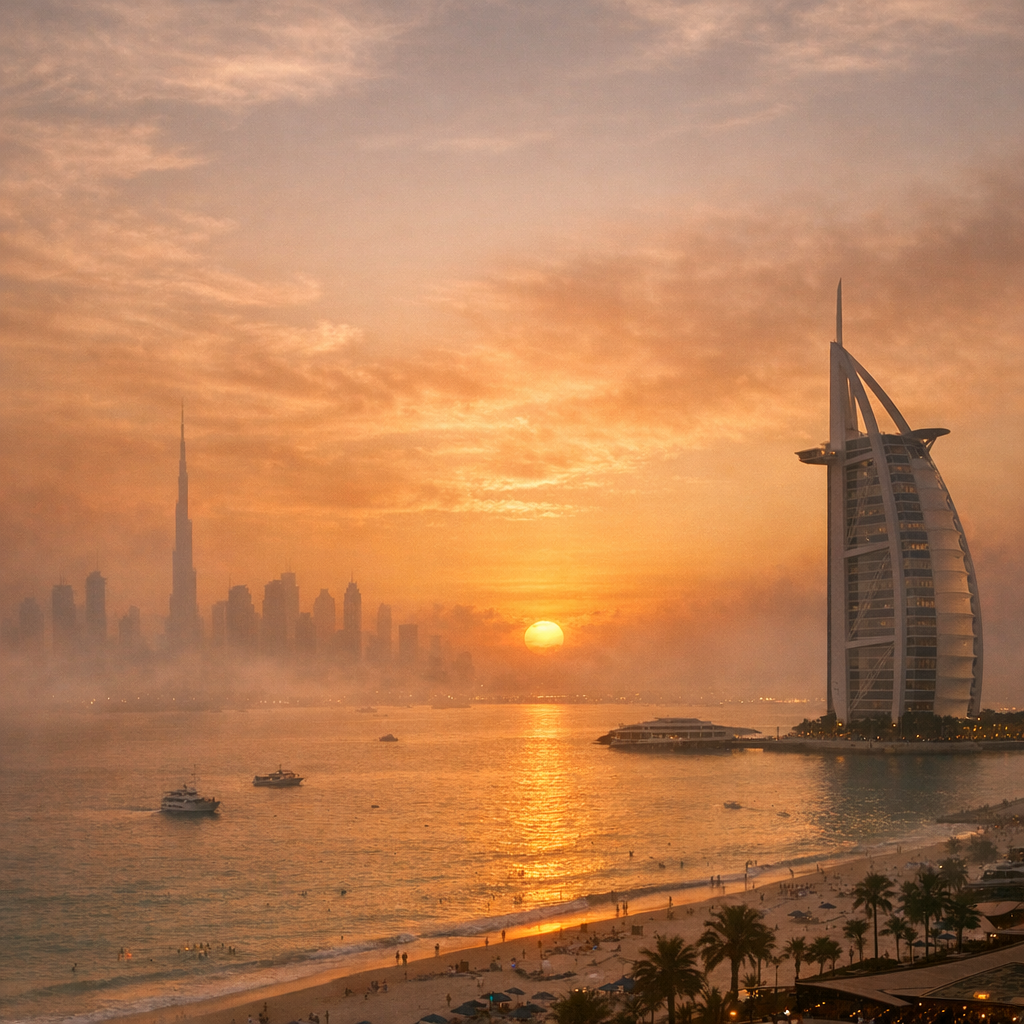
Dubai’s climate is often described in extremes: intense heat, high humidity, rare rainfall—but beneath those daily experiences lie important patterns and ongoing environmental challenges that affect everyone who lives here.
Desert Heat and Humidity: What Powers the Swelter
The city has a hot desert climate, with summers stretching from late spring through early fall. Daytime highs in summer can soar past 45 °C, especially in July and August. Evenings bring little relief, as warm sea breezes combine with moisture to keep nighttime temperatures elevated. Winter offers more temperate conditions, with daytime highs around 25-30 °C and cooler nights, particularly further inland. Rain is infrequent—mainly occurring between November and March in brief downpours or thunderstorms.
Why Does It Feel So Humid Without Rain?
Humidity in Dubai often climbs above 90 % even when skies are clear. This moisture comes from warm sea temperatures along the Arabian Gulf and Arabian Sea, and from seasonal winds like the “Kous” winds that bring moist air inland. Even though humidity levels are high, conditions for rainfall—such as rising air and condensation—are often not met, which is why the air feels heavy but the sky stays dry. Nights tend to feel much damper as temperatures drop, which reduces how much moisture the air can hold, raising relative humidity overnight.
Environmental Pressures Beyond the Thermometer
Heat and humidity are just parts of Dubai’s environmental picture. Climate change is expected to intensify several existing pressures:
- Sea-level rise and coastal erosion: With much of Dubai built near sea level, rising waters threaten infrastructure, artificial islands, beaches, and freshwater sources.
- Air quality risks: Dust storms, vehicle emissions, industrial activity, and high humidity all contribute to poor air quality. The UAE operates a National Air Quality Platform that monitors pollutants like PM10, NO₂, and ozone levels, offering forecasts and health advice.
- Temperature and heat stress: Rising sea and air temperatures intensify heat stress, particularly for outdoor workers, children, and older adults. Wet-bulb temperatures, which include humidity, are increasing and can push conditions toward dangerous thresholds.
Adaptation, Awareness, and Everyday Steps
Planning and policy are in motion—programs like the UAE’s National Air Quality Agenda outline measurable goals for cleaner air through emissions control, better monitoring, and public health safeguards. Research groups are tracking rising seas and coastal vulnerability. Meanwhile, residents and local businesses can help by supporting green urban design, reducing vehicle use, maintaining good indoor air systems, and staying alert to AQI updates.
In a place where weather feels like character, not just backdrop, understanding the mechanics is more than academic—it’s how we stay safe, comfortable, and sustainable.