

By Khalid Al-Qasimi
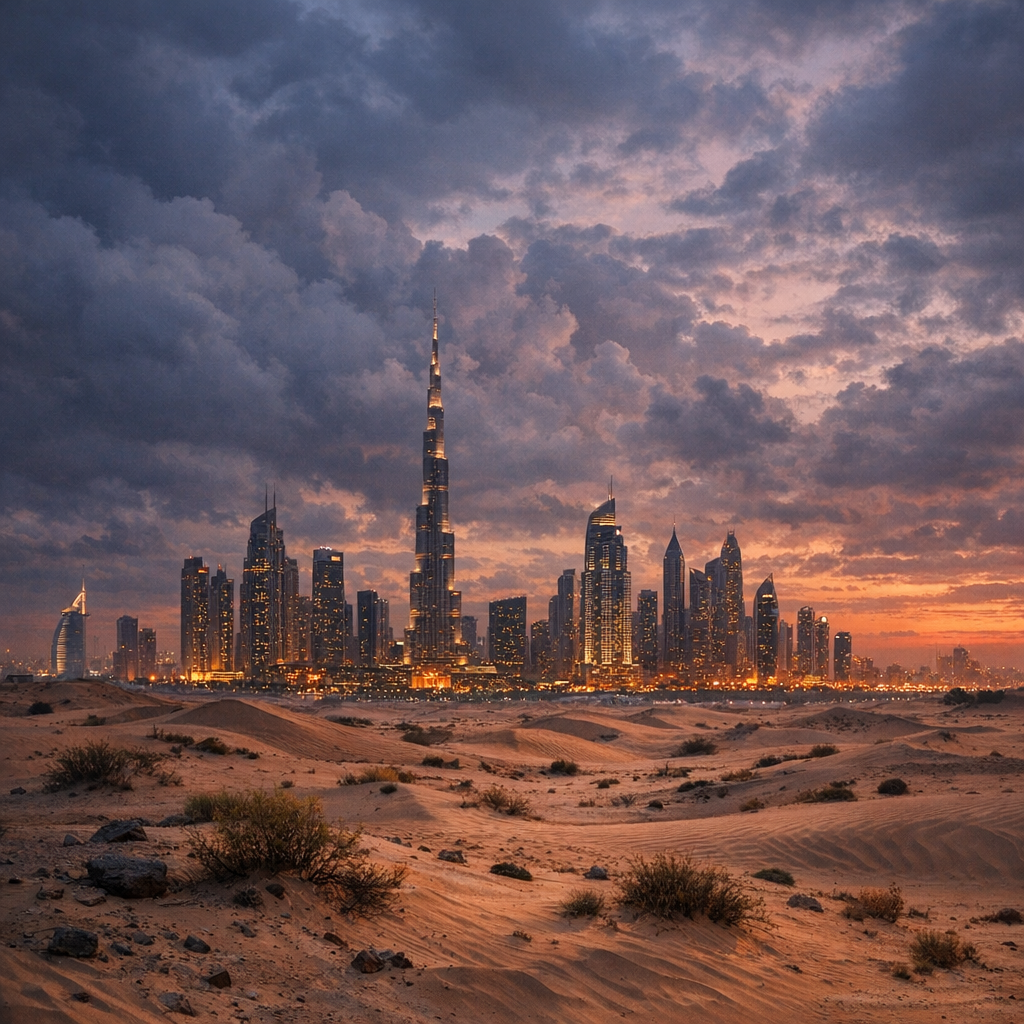
Dubai’s climate shapes daily life, from the sweat of summer afternoons to the golden clarity of its mild winters. As the city continues to grow, understanding that climate—and the environmental pressures it faces—matters not just for comfort, but for health, infrastructure, and sustainability.
The Seasons and Weather Patterns
Dubai has a hot desert (“BWh”) climate—long, very hot, humid summers from May through September, and mild, mostly dry winters from December through February. Temperatures in the peak summer months often exceed 40 °C, while winter daytime highs average in the mid-20s, with cooler nights especially inland. Annual rainfall is low—around 70-90 mm—concentrated in the winter season.
Recent Trends in Heat & Rain
Long-term data show Dubai has warmed by roughly 2.5 °C over 80 years, increasing the number of “hot days” (above 30 °C) significantly. Rain remains rare, but when it does fall, events are more intense, with brief downpours sometimes causing flash flooding and disruption.
Environmental Pressures & Risks
• Air Pollution & Urban Heat Islands: Urban areas trap heat at night, raising risks during extreme heat events. High temperatures combine with pollutants to challenge air quality—bad for asthma, cardiovascular health, and outdoor labor. • Water Scarcity & Consumption: With minimal rainfall and little natural freshwater, Dubai relies heavily on desalination—and high energy use—to meet household and agricultural demands. • Climate Change Impacts: Sea level rise, greater temperature extremes, and more unpredictable rainstorms threaten coastal zones, natural habitats, and built infrastructure.
Planning & Resilience—What’s Being Done
Dubai’s local and federal authorities are responding. The Ministry of Climate Change and Environment is pushing policies aligned with sustainability: cleaner energy, stricter environmental permits, and building codes aimed at cutting emissions. Initiatives like the National Energy Strategy and air quality action plans aim to reduce carbon footprints and monitor pollutant levels. Research is also helping target interventions—studies identifying which neighborhoods heat up most at night, or which infrastructure is most vulnerable to storms.
What Can Residents Do?
Small actions add up—and many are practical:
- Limit time outdoors during peak heat, stay hydrated, use sunscreen and wear light, breathable clothing.
- Monitor air quality reports—avoid outdoor exercise or heavy traffic areas when pollution is high.
- Support green urban design—plants, green roofs, lighter building materials help reduce heat retention.
- Practice water conservation—wasting water adds strain on desalination and treatment systems.
Dubai’s climate brings both beauty and challenge. As weather becomes more unpredictable, understanding how patterns are shifting—and what we all can do—will help ensure the city remains resilient, sustainable, and safe.