

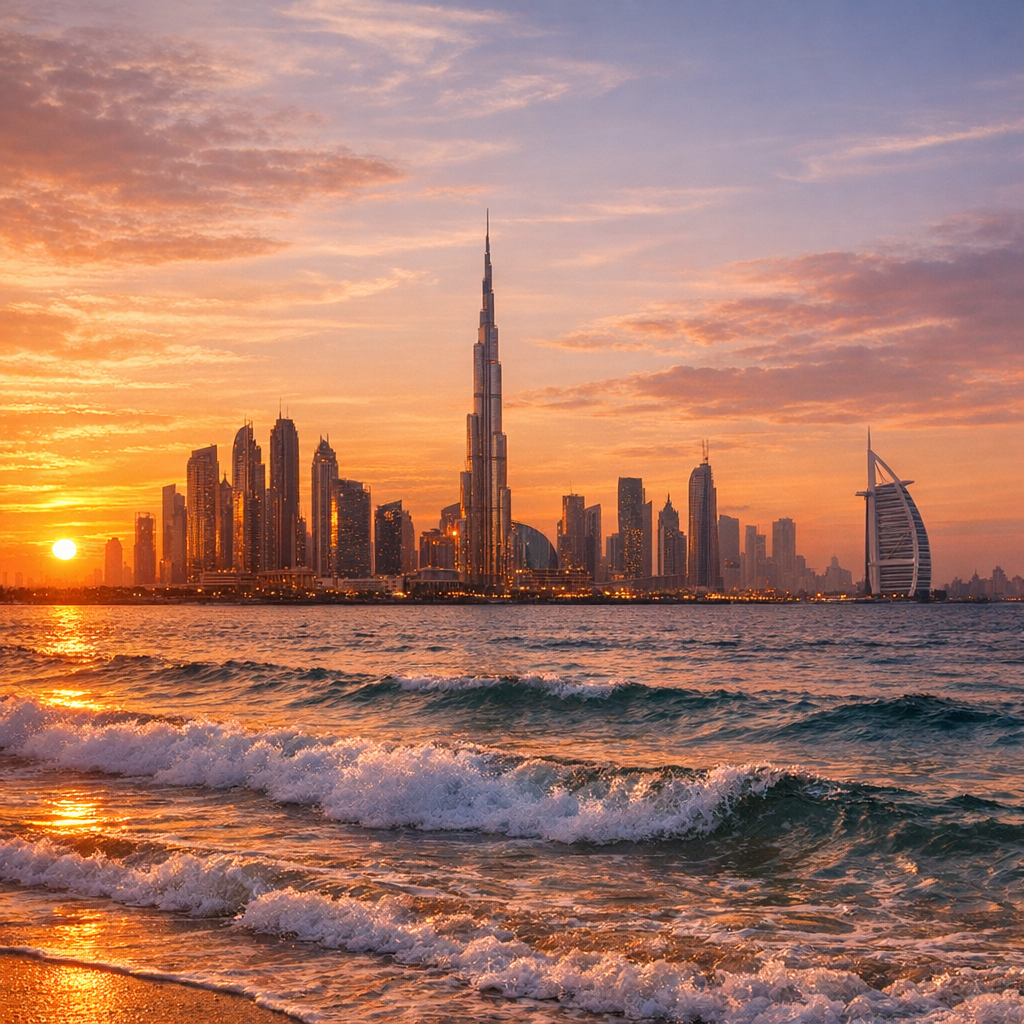
Dubai’s environment blends beauty and intensity. From blistering summer days by the sea to mild, clear-skied winters, understanding its climate and evolving environmental challenges matters for all who live here or plan to.
Seasonal Climate Rhythms in Dubai
Dubai experiences two primary seasons: summer and winter, separated by transitional periods in spring (April–May) and autumn (October–November). Each phase has distinct temperature ranges, humidity levels, and precipitation patterns. In summer, daytime highs often exceed 40 °C, with nights remaining hot and humid, especially along the coast. Winter brings milder days and cooler nights, with average lows dipping into the mid-teens Celsius. Transitional months can see sudden swings in temperature and occasional storms.
Climate Change Trends and What They Mean
Long-term data show that Dubai has warmed by 2–3 °C since the 1940s, with a corresponding increase in the number of hot, humid nights. These changes amplify heat stress, especially during summer’s peak months.
Rainfall remains sparse—annual precipitation averages between 70-80 mm—but when it does occur, especially in winter or during transitions, it can be intense and lead to flash flooding, challenging urban drainage systems.
Environmental Challenges: Air, Sea, and Sustainable Planning
Air quality in Dubai is a mixed picture. Dust storms and desert particulates contribute seasonal spikes in pollution, while traffic and industrial emissions add to year-round local impacts. Some months feel less tolerable due to haze and set-in humidity trapping pollutants.
Rising sea levels are a serious concern. Projections indicate that by the end of the century, coastal areas could face up to half a meter or more of sea level rise, threatening beaches, desalination plants, ports, and low-lying infrastructure. Planning ahead is essential.
Responding to the Environment: What Dubai Is Doing
The UAE has adopted a strategic drive toward climate neutrality by 2050, with policies aiming to reduce greenhouse gas emissions, increase renewable energy use, enhance green infrastructure, and improve climate resilience across sectors. These efforts include and benefit from national climate projections and adaptation strategies.
What Residents Can Do
- Stay informed: monitor local forecasts and air quality indexes before outdoor errands, especially during transitional periods or when dust storms are predicted.
- Practice heat safety: avoid strenuous activity during midday, seek shade, use cooling indoors.
- Support green action: use public transit, conserve water, reduce waste, support tree planting.
- Participate in community resilience: know local plans for sea level rise or flooding, engage with neighbourhood preparedness.
Dubai’s climate is challenging but not unmanageable. With thoughtful planning, both by authorities and individuals, we can adapt, protect our environment, and preserve urban livability even as conditions shift.