

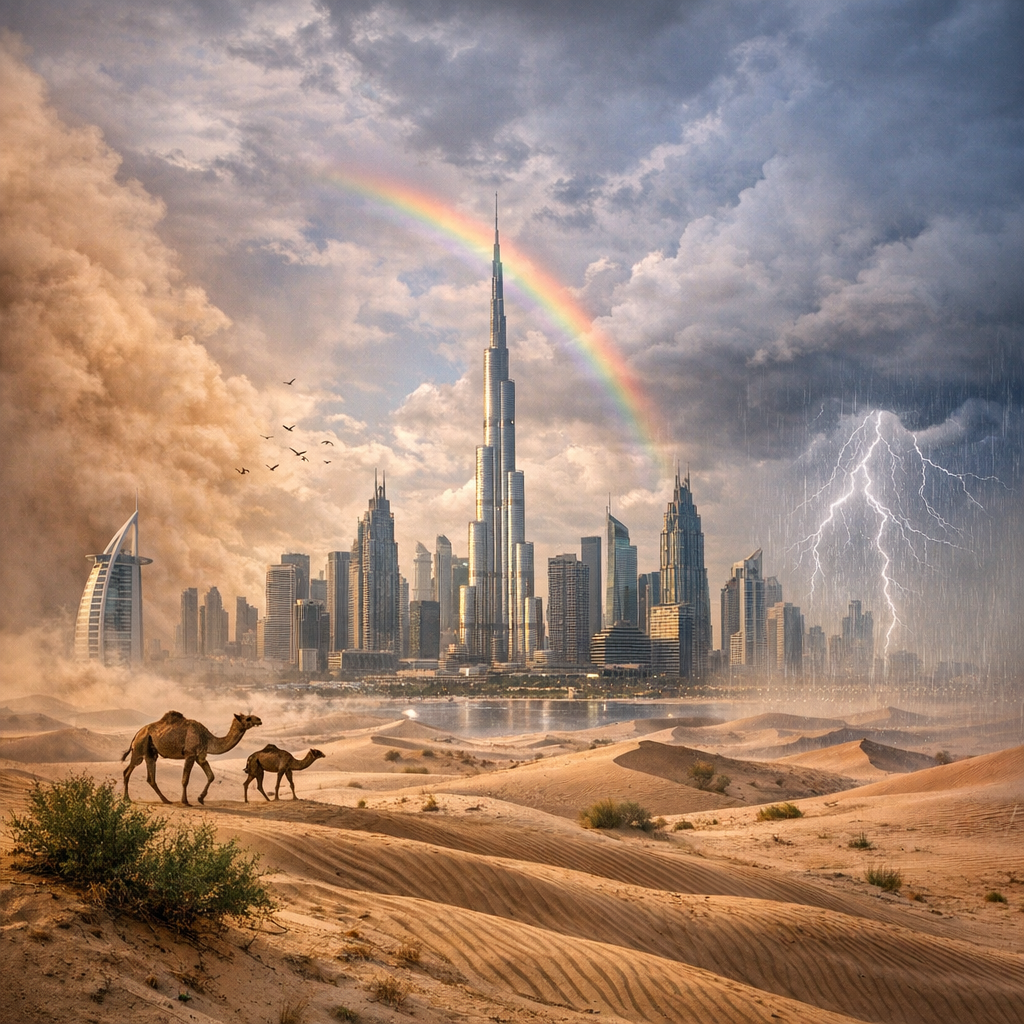
Living in Dubai means more than first-hand experience with summer heat or occasional rainfall; it’s also about the way the city adapts to its desert climate and balances development with environmental stewardship. Here’s a closer look at the weather patterns that shape life here and the sustainability systems helping chart the city’s future.
Weather & Seasonal Climate Overview
Dubai features a hot desert climate, with two main seasons — a blisteringly hot summer and a cooler winter — punctuated by transitional periods in-between.
Summer (Late April – Early October)
During this period, daytime temperatures often eclipse 40 °C, matched by high humidity along the coast that adds to discomfort. Nights remain warm, seldom dropping below the high 20s °C. Rain is scarce, but localized thunderstorms can unexpectedly develop, and dust storms driven by northerly or northwestern winds are common.
Winter (Late October – Mid-April)
Winters bring relief with daytime highs around 22-25 °C and cooler nights. Rainfall is modest but occurs primarily between November and March, often in short, intense bursts. Inland and high elevation areas can experience colder overnight temperatures.
Transition Phases
Spring and autumn are marked by fast weather shifts. Temperatures and humidity levels change rapidly, sea breezes strengthen or fade, and fog or haze sometimes build up — especially near coastal zones. These months can feel unpredictable and are often when rare atmospheric events occur.
Environmental Challenges & City Responses
Water Use, Reuse & Sustainability
As rainfall remains minimal, Dubai depends heavily on desalination to meet urban water demand. To reduce dependency, the city has invested in water reclamation. About 90% of wastewater is reused today for landscaping, cooling, and municipal infrastructure, with goals to reach nearly full reuse. These efforts save electricity and help protect scarce groundwater sources.
Air, Ecosystems & Protected Areas
Dubai, like much of the UAE, faces issues of air quality related to heat, dust, humidity, and emissions. It maintains strategic protection zones — including desert conservation reserves, mangrove habitats like Ras Al Khor, and wildlife sanctuaries — where authorities monitor water quality and species to ensure ecosystem health.
Sustainability & Strategic Vision
Dubai has committed to long-term strategies to reduce energy, water, and resource use, and to lower carbon emissions. Key plans include water demand management, clean energy scaling, and waste-to-energy infrastructure. Initiatives like Dubai Can encourage sustainable behaviour among individuals — reducing single-use plastics and increasing refill water stations across the city.
What Residents Can Do
- Track daily weather updates to manage heat exposure during summer.
- Adjust outdoor activities in winter or transitional months to avoid rainstorms or poor air quality days.
- Support water stewardship: look out for leaks, use greywater where possible, favour landscaping native plants.
- Reduce single-use plastic, carry reusable bottles, and use refill stations.
- Stay informed about air quality warnings — especially for outdoor activities or vulnerable individuals.
Dubai’s climate may be extreme at times, but when weather understanding meets environmental initiative, the city demonstrates resilient design. Awareness and action, small or large, add up — making summer more bearable, winter more inviting, and the entire year more sustainable.