

By Khalid Al-Qasimi
Dubai’s Climate at a Glance
Dubai has a tropical desert climate defined by hot, humid summers and short, warm winters. Daytime highs can soar above 40 °C during peak months, often coupled with coastal humidity over 60 %. Winters bring relief: daytime temperatures around 23 °C, nights cooling to the low teens. Annual rainfall is modest—typically under 100 mm—with most rain falling between December and February. April–May and October–November serve as transitional periods with unpredictable weather.
Seasonal Shifts and Their Effects
Summer (June–September)
Summer in Dubai brings intense heat, soaring temperatures often above 43 °C, and high humidity by the coast. Nights remain warm. Rainfall is rare, but when humid air meets rising terrain inland, convective clouds may trigger afternoon downpours in the south and east. Dust events and limited visibility can impact health and daily routines.
Winter (December–March)</n
Winter offers cooler, more comfortable conditions. Daytimes are pleasant, nights can be chilly inland—especially away from the coast. Rain—including showers and sporadic thunderstorms—becomes more common. Strong northwesterly winds and occasional low-pressure systems from surrounding regions contribute to these cooler spells and rain events.
Transitional Periods (April-May and October-November)
These months are marked by rapid shifts: rising temperatures, changing winds, humidity swings, and sporadic rain or fog inland and in the mountains. While still hot, these times offer glimpses of shifting weather patterns and are important for planning—from agriculture to infrastructure readiness.
Key Environmental Challenges Ahead
Dubai faces several growing pressures as climate change intensifies:
- Water scarcity: With scarce freshwater sources, the UAE is heavily reliant on desalination. Strategies aim to reduce overall demand, enhance water reuse, and increase storage to ensure long-term supply resilience.
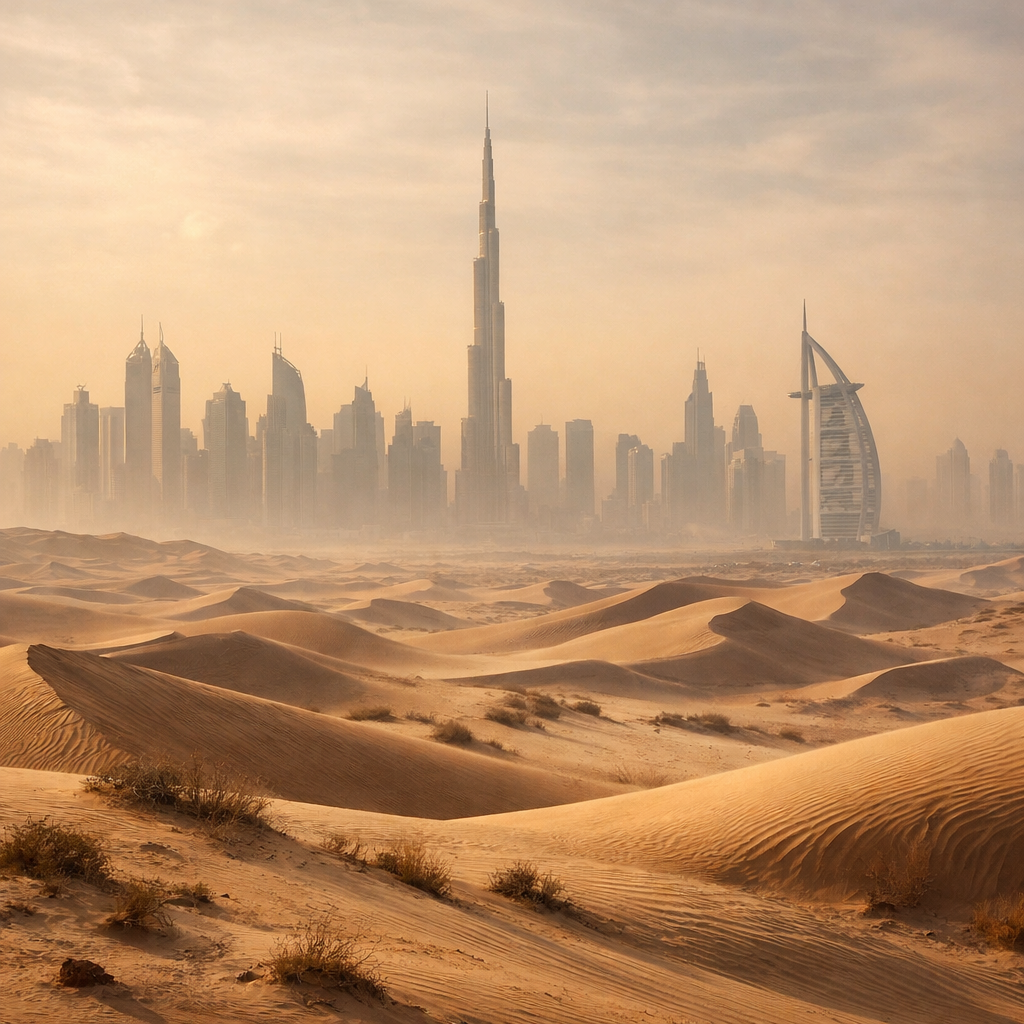
- Air quality and dust storms: Hot summers often bring dust and haze affecting visibility and respiratory health. Coastal humidity amplifies discomfort. Urban planning and greenery are part of the response to mitigate airborne particles.
- Extreme weather events: Heavy rainfall events, though rare, can lead to flash floods. Rising sea levels also pose risks to low-lying coastal infrastructure. Adaptation planning is increasingly important.
What’s Being Done—and What You Can Do
The UAE has put in place several policies to navigate environmental challenges sustainably:
- Water Security Strategy 2036: Targets include reducing water demand by roughly 21 %, boosting productivity per cubic meter, and achieving higher reuse rates for treated water.
- Climate adaptation frameworks: Plans cover everything from infrastructure and urban design to agriculture, taking into account risks like heat waves, sea-level rise, and erratic rainfall.
- Community action: On a personal level, minimizing outdoor activities during peak heat, conserving water, using efficient cooling, and supporting greener landscaping all make a difference.
Looking Forward
Dubai’s climate remains dynamic. Residents should expect more frequent days of extreme heat, occasional intense rainstorms, and challenges related to water availability and air quality. But with ongoing government strategies, infrastructure investments, and public awareness, there is a pathway toward resilience.
Staying tuned to official forecasts, adjusting habits with the seasons, and supporting sustainable initiatives in your community will help ensure that Dubai remains both livable and resilient for years to come.