

By Khalid Al-Qasimi
Dubai’s Climate: More Than Just Hot
Dubai sits in a hot desert climate with two primary seasons—summer and winter—bridged by brief, transitional periods in spring and autumn. Winters (roughly December through March) bring mild days in the mid-20s°C, cooler nights, and most of the year’s sparse rainfall. Summers, lasting from about May to September, are intense: daily highs soar to 40-42°C or more, with high humidity along the coast. Transitional months like April and October often feel like a preview or aftermath of summer’s extremes.
Rainfall and Weather Extremes
Rain in Dubai is rare and irregular. Most precipitation falls during the winter, typically in short, sudden bursts of heavy rain or thunderstorms. Occasionally, summer thunderstorms emerge over the Hajar Mountains or desert outskirts, catching many by surprise. When storms do hit, flash flooding is possible, because much of the urban and desert terrain is not built to handle sudden volumes of water.
Humidity, Dust, and Air Quality
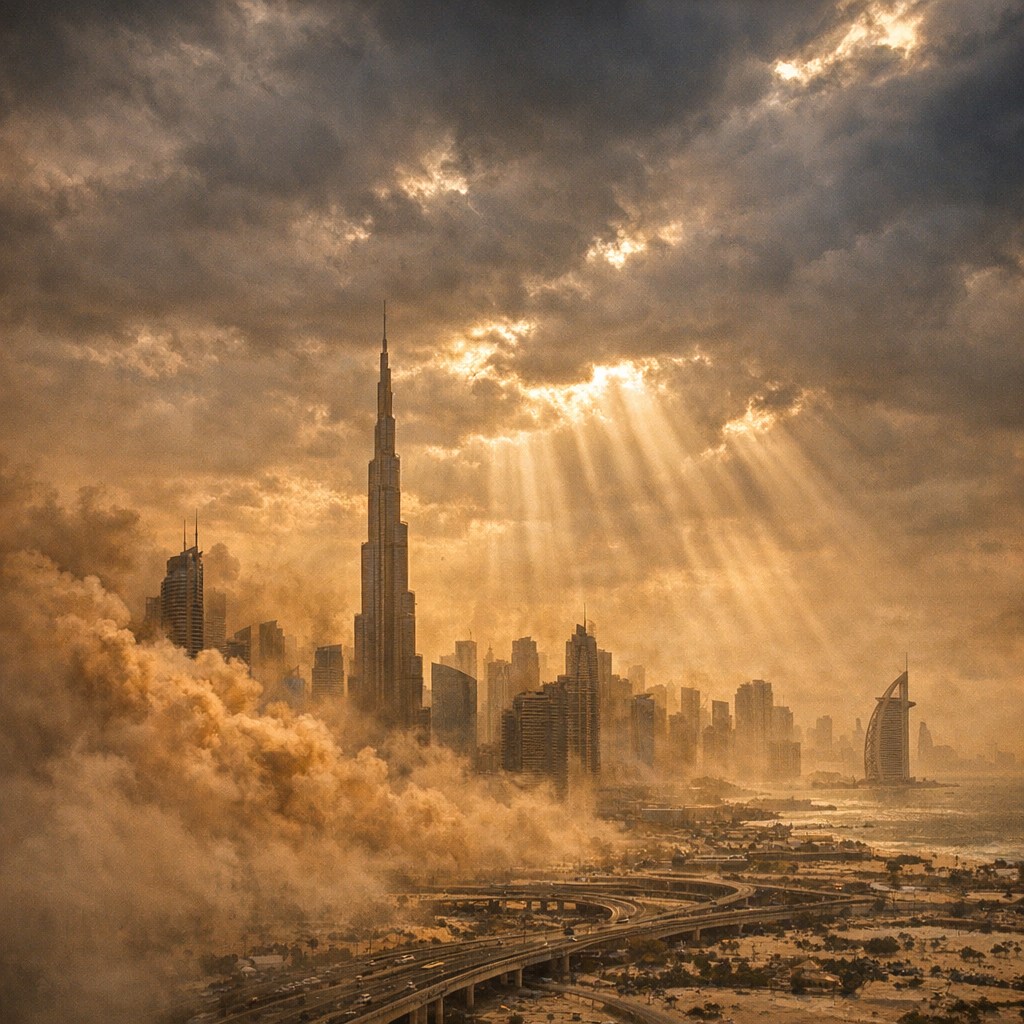
One of the most challenging features of summer in Dubai is high humidity, especially along the coast. It amplifies the heat, making afternoons feel sticky and sometimes dangerous. During dry periods, especially when winds prevail from the north or northwest (such as Shamal winds), dust and sand get lifted into the air. These can reduce visibility, impact breathing, and raise air pollution levels.
What the Authorities are Doing
The UAE uses a national Air Quality Index (AQI) and a platform with real-time monitoring and forecasts to track pollutants. It helps residents understand health risks based on current levels of particulate matter (like PM₂.₅ and PM₁₀), nitrogen dioxide, sulphur dioxide, ozone, and more. There are clear targets and policies in place, including the National Air Quality Agenda 2031, designed to manage outdoor air quality, industrial emissions, and public health impacts.
Environmental Trends and Climate Risks
Like many desert cities, Dubai is particularly sensitive to climate change. Rising average temperatures, expanding urban areas, and increasing energy demands are altering local weather patterns. This includes warmer winters, more frequent heatwaves in summer, and growing concerns around water scarcity, sea level rise, and ecosystem impacts. Urban residents may notice heat-retaining buildings and pavement boosting night temperatures, while green spaces struggle under prolonged heat stress.
Adapting Daily Life
- Dress for the weather: lightweight, breathable clothes in summer; layers for cool evenings in winter.
- Plan outdoor activity for mornings or after sunset during hottest months.
- Use air quality apps to monitor AQI; stay indoors or wear a mask during high pollution or dust events.
- Watch out for localized floods after heavy rain events; avoid driving through flooded roads.
- Encourage green building, shade trees, and water-efficient landscaping in neighborhood planning.
Looking Ahead
Dubai is investing in climate resilience: updating building codes, expanding green infrastructure, improving public transport, and enhancing flood management systems. Understanding the patterns—heat, rain, humidity, dust—is not just useful for visitors, but critical for long-term planning of water supply, health services, and habitat protection.
The climate here may be defined by extremes, but with data, planning, and community awareness, Dubai continues to adapt and flourish in its desert environment.