

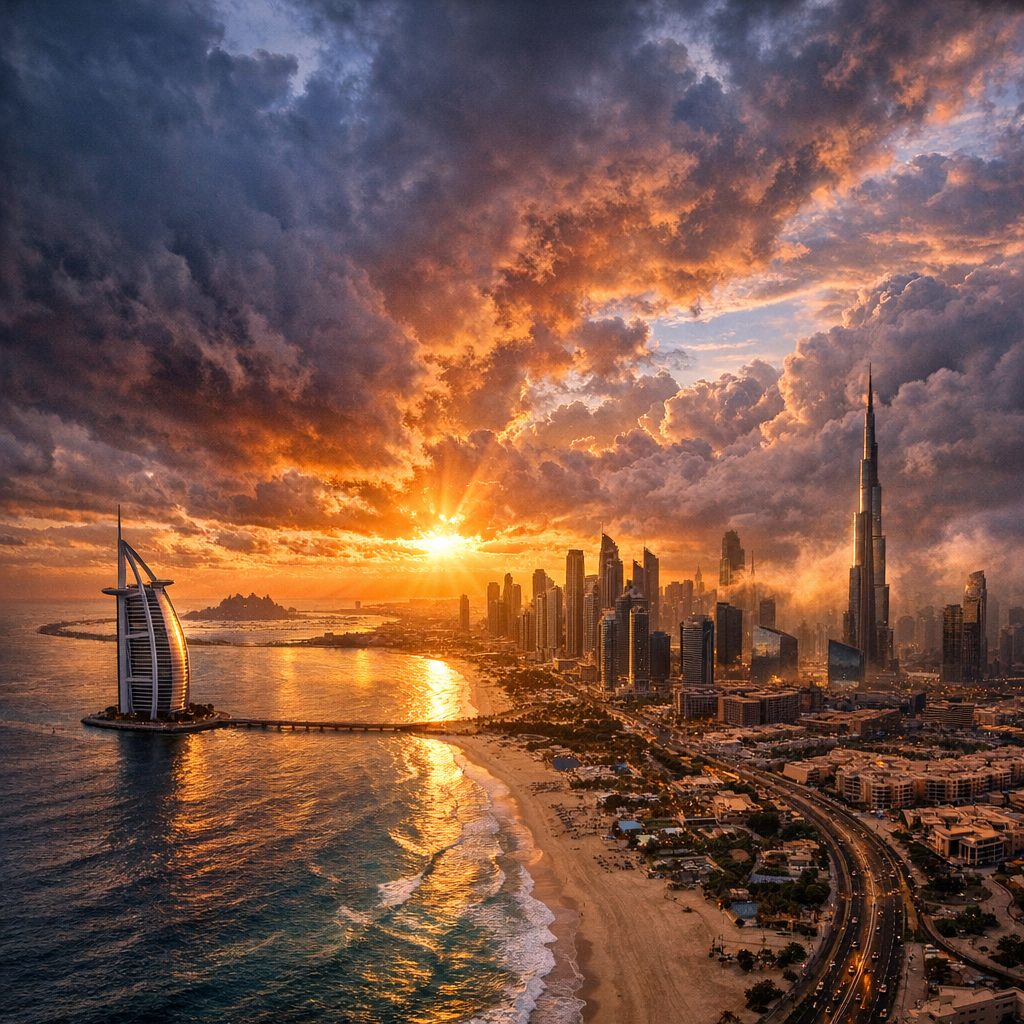
Dubai’s climate may seem simple at first—hot and dry—but it’s shaped by distinct seasons, evolving weather patterns, and growing environmental challenges. Knowing what to expect helps us adapt, stay safe, and plan for a sustainable future.
Climate & Seasonal Rhythm
Dubai has a tropical desert climate marked by two main seasons: summer (roughly April through September) and winter (October through March), with brief transitional periods between them. Summers bring extreme heat and high humidity, especially near the coast, while winters are warm during the day and mild at night.
Typical summer highs soar near 43 °C, with coastal humidity making it feel much hotter. Winters are gentler, with daytime highs around 23 °C and nighttime lows dropping to about 12 °C or lower in inland areas. Rainfall is rare overall and concentrated in the winter months—January usually being the wettest. Annual rainfall averages under 100 mm. Most of the year is clear and sunny.
Environmental Pressures & Shifting Patterns
In recent years, Dubai and the wider UAE have experienced signs that are consistent with global climate change. Winters are becoming warmer, summer humid heat is intensifying, and extreme weather—such as heavy rainfall events—has grown more frequent. These shifts are affecting ecosystems, infrastructure, and human comfort.
Coastal areas are especially vulnerable due to rising sea levels and warmer sea temperatures which affect marine life, coral reefs, and coastal infrastructure. Inland and desert zones, meanwhile, suffer from heat stress, scarce water supplies, and higher daily temperature swings. Dust storms, particularly during summer and transitional periods, remain a recurring concern.
Adapting and Looking Forward
To prepare for changes, public and private sectors are focusing on environmental resilience. Efforts include expanding coastal protection, planting mangrove trees, improving water conservation, and strategizing around building design to reduce heat exposure. Many policies are aligning with climate neutrality goals.
On a personal level, simple steps help: planning outdoor activities during cooler parts of the day, using shade and breathable fabrics, staying informed about weather alerts, and conserving water in daily habits.
What Residents Should Know
- During summer, intense heat and high humidity near the sea make mornings and evenings more bearable than midday.
- Winter rainstorms can be unpredictable—flash flooding is possible in common underpasses and low-lying roads.
- Coastal high humidity plus heat raises the risk of heat-related illnesses; hydration and shade are essential.
- As the climate warms, design choices like greenery, reflective materials, and natural ventilation become more than aesthetic—they are vital.
Dubai’s weather and environment are changing slowly but noticeably. Understanding these patterns and responding early makes the city more resilient—and comfortable—for everyone.