

By Khalid Al-Qasimi
Dubai has long been known for its blazing summers and mild winters. But beneath the familiar heat and sun, changing weather patterns and environmental shifts are quietly reshaping life across the city and emirate. Here’s an updated look at what the trend data and environmental reports tell us—and how residents and policymakers might prepare.
Climate Normals: Heat, Rain, and Desert Conditions
Dubai has a hot desert climate with average annual temperatures hovering around 27-28 °C. During the warmest months—July and August—mean daytime highs often exceed 40-41 °C, while winter lows can dip into the mid-teens °C. Annual rainfall is low, typically under 80 mm, and limited to short, intense bursts, mostly between December and March. The driest period runs from late spring through summer when rain becomes almost nonexistent. Sea temperatures also remain high in summer, contributing to high humidity along the coast.
Trends Over Time: Warming, Hot Nights, and Extremes
Long-term data show that Dubai has warmed by approximately 2.5 °C since the mid-20th century, translating to hotter days and an increasing number of tropical nights—when overnight lows stay above 20-25 °C. Several studies indicate that what used to be rarer cold nights are now far less frequent, especially in urban and suburban areas.
At the same time, rainfall patterns are becoming more erratic. Though total annual rainfall remains low, intense storms—sometimes tied to warmer sea surface temperatures—can hit with little warning, causing flash floods and infrastructure strain.
Environmental Impacts and Risks
Air Quality and Dust Storms
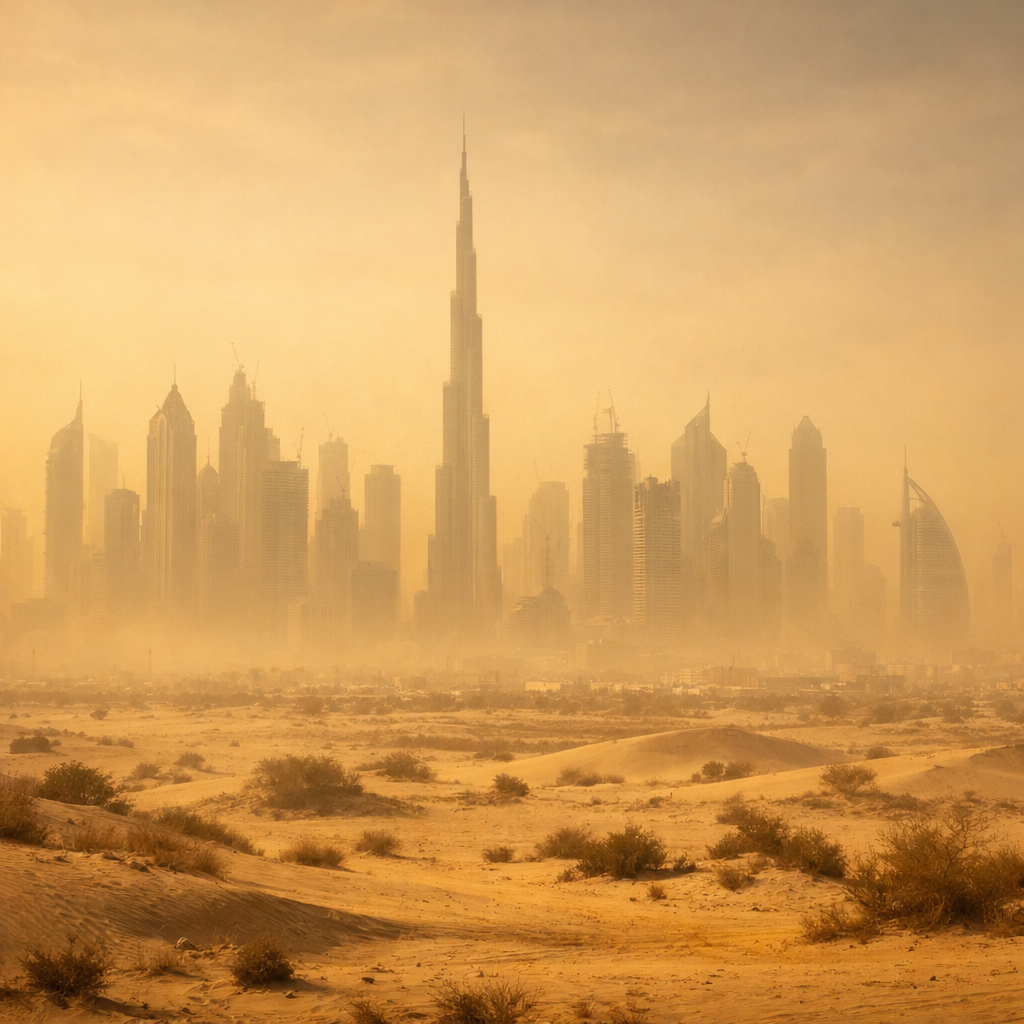
Periods of heat often bring northwesterly or north-easterly winds from interior deserts and neighboring regions. These winds can carry large dust loads, reducing visibility, increasing air pollution, and affecting respiratory health. Crowded urban development magnifies these effects.
Heat Stress and Energy Demand
Hotter days and warmer nights increase demand for cooling—air conditioning, refrigeration, and power use generally rise. This puts strain on electrical grids, energy supplies, and contributes further to greenhouse gas emissions unless offset. For individuals, heat stress—especially outdoors—is a growing concern as safer heat tolerance thresholds are exceeded more often.
Coastal Risks and Water Resources
Rising sea levels, warmer seas, and higher humidity threaten coastal infrastructure from flooding to erosion. Seawater intrusion also threatens groundwater quality. On the water supply side, limited rainfall and high evaporation make sustainable water management a pressing concern.
What Can Residents Do?
– Stay informed: Use official platforms like the National Center of Meteorology and mobile apps for air quality alerts, heatwave warnings, and early warnings during storms.
– Adapt your routines: Seek shade during peak heat, schedule outdoor activity early morning or late evening, and ensure good ventilation indoors.
– Reduce environmental footprint: Use energy-efficient cooling, conserve water, plant native vegetation that tolerates heat and less water.
– Support resilient infrastructure: As Dubai and UAE plan future development, prioritizing green building standards, improved drainage systems, and coastal protection helps shield the city from growing climate risks.
Outlook
Dubai’s climate is not just “hot with rare rain” any more. It is warming, the extremes are changing, and environmental stresses are intensifying. While professions including urban planning, health, agriculture, and water management will need to adapt, individuals also have a role to play. Understanding what the data show—and preparing for a more variable future—will make this city more resilient to the rising heat and shifting skies.