

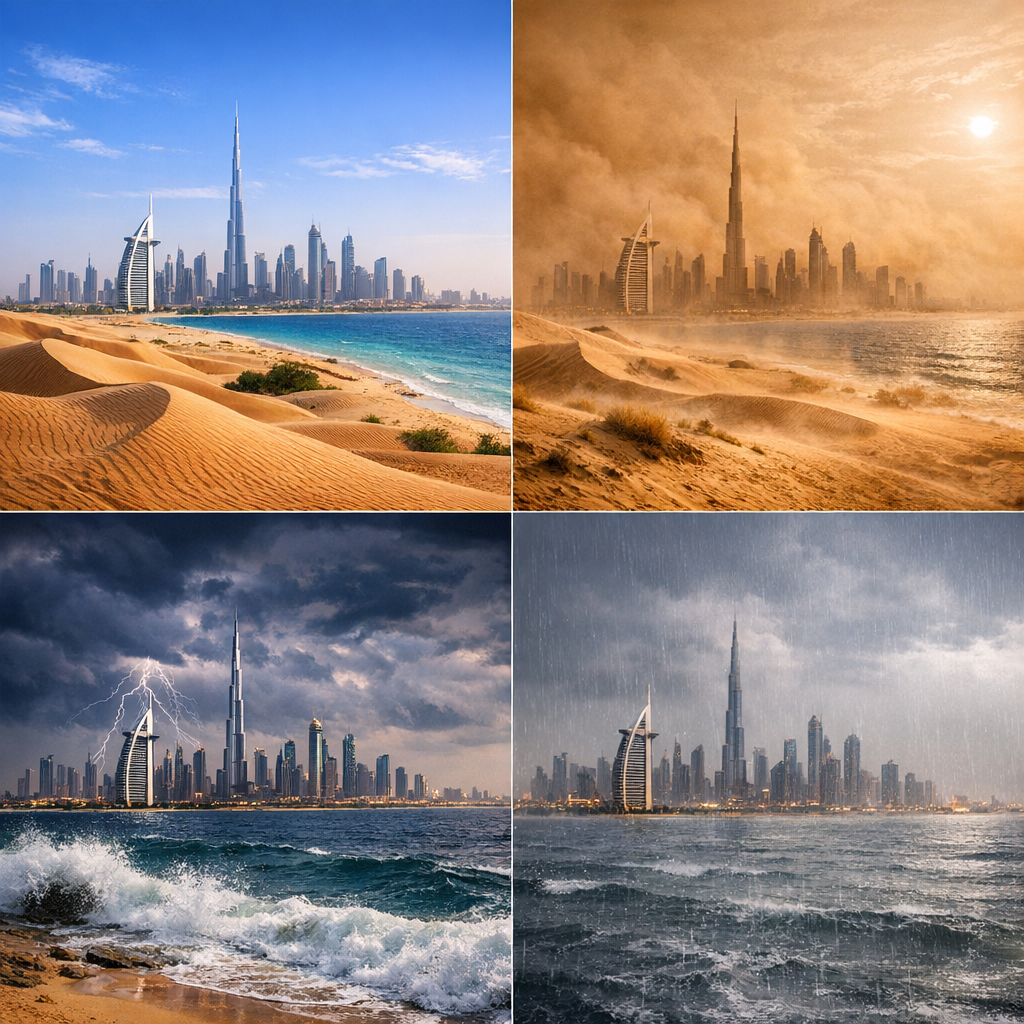
Dubai’s weather is shaped by its arid desert setting plus the influence of the Arabian Gulf. Residents and visitors alike experience two main seasons—with two shifting transition periods—each with distinct characteristics. Below is an evergreen guide to what to expect year-round, how the environment is changing, and how to stay comfortable.
Seasonal Phases in Dubai’s Climate
Winter (December-February)
Winter brings the most pleasant weather. Daytime highs are usually in the low-20s °C, while nights can drop to the mid-teens. This is when most rainfall occurs—though still relatively modest—and skies tend to be clear and calm. Coastal areas remain more humid overnight, while desert outskirts cool more sharply.
Spring (March-April) & Autumn (October-November)
These transition periods are marked by rapid changes. In spring, temperatures rise quickly from the comfortable to the hot. By autumn, heat eases and evenings grow cooler. Both periods offer a breathing space between summer’s intensity and winter’s mildness.
Summer (May-September)
Summer is long, hot, and humid—especially near the coast. Daytime temperatures regularly reach around 40-41 °C, with nights staying warm, often near 30 °C. Humidity and heat combine to produce high heat-index readings. Rain is rare during these months.
Precipitation and Environmental Trends
Annual rainfall in Dubai is low, with the bulk falling in the winter season. Average totals hover around 80-90 mm per year, often clustered in short bursts and thunderstorms. Summer months see virtually no rain.
Over recent decades, climate studies show worrying shifts: rising average temperatures, decreasing precipitation in some years, and increasing humidity and sea-surface temperatures. Projections suggest more intense heat, longer dry spells, and larger rainfall amounts when storms do develop.
What Shapes Dubai’s Weather
- Geography: Dubai’s coastal position moderates daytime temperature slightly near the Gulf, but humidity remains high.
- Shamal Winds & Dust: During certain periods, north-westerly winds bring dust and storms. Winter and early summer are times when dust events or squalls can appear suddenly.
- Climate Change: Rising average temperatures and shifts in precipitation timing are becoming more evident. Sea surface warming and increasing humidity influence both comfort and environmental stability.
Tips for Residents and Visitors
- During summer, avoid strenuous outdoor activity in midday; opt for mornings or late evenings.
- Dress in lightweight, breathable clothing; stay hydrated especially during humid nights.
- In winter, mornings can be cool—layers help, especially outside central city areas.
- Storms—though rare in summer—can cause flash flooding or disrupt travel; keep a local weather app at hand during rainy seasons.
- Supporting green initiatives—shade planting, cooling infrastructure, sustainable building—helps offset rising heat and protects vulnerable communities.
Dubai’s climate may test endurance—but it also offers unique rhythms: cooler winters, blazing summers, and moments of transition that bring relief. Awareness, preparation, and adaptation are the keys to living well throughout the cycles of sun, heat, calm, and change.