

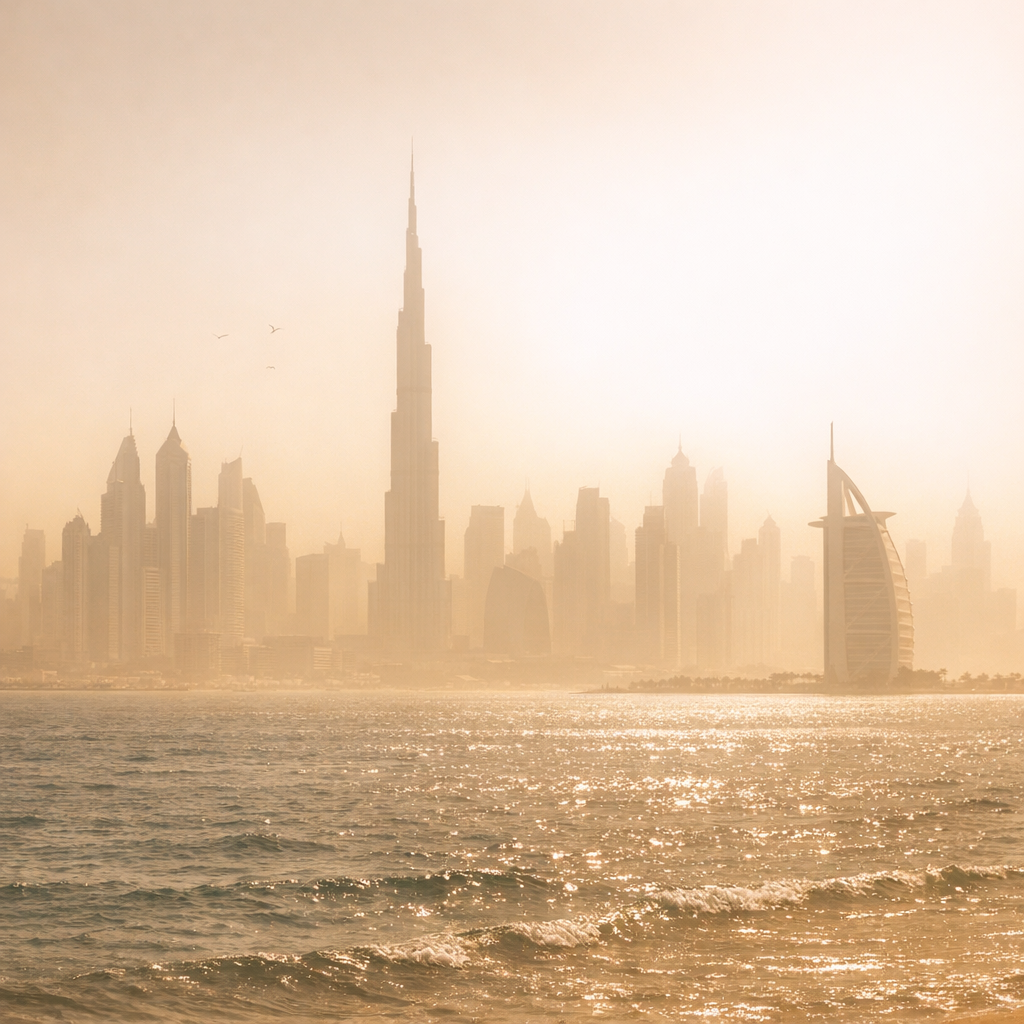
By Khalid Al-Qasimi
Climate at a Glance
Dubai has a hot desert climate (Köppen BWh) with very high temperatures for much of the year, minimal rainfall, and strong seasonal contrasts. Annual average temperature hovers around 27-28°C, with summers scorching and winters mild to warm. Rain is infrequent overall — most moisture falls during the winter months, with little to none between late spring through early autumn. Average annual rainfall is under 80 mm. Mean relative humidity sits near 55-60%, rising sharply in summer nights along the coast.
What Each Season Brings
Summer (roughly May–September)
Summer brings peak heat: daytime highs often above 40°C, nights staying in the low 30s. Coastal humidity soars, often over 90%, making it feel even hotter. Rain is practically nonexistent, though occasional sea breezes and convective clouds may appear in southern inland areas.
Winter (roughly December–March)
A contrast: daytime highs in the low 20s to mid-20s°C and nights sometimes dipping to the low teens. Rainfall peaks during these months, including thunderstorms. Coastal areas feel cooler especially after sunset, deserts cooler still. Humidity lower and more comfortable during daylight hours.
Transitional Periods (Spring & Autumn)
These periods (around April–May, October–November) are marked by rapid shifts. Temperatures rise or fall quickly, humidity patterns fluctuate, and weather can feel harsher than expected — harsh sun in spring, lingering warmth and humidity into early autumn. Fog and mist appear sometimes in early morning, especially inland.
Environmental Trends & Concerns
Long-term observations show a warming trend of roughly +0.3-0.5°C per decade in temperature averages, which means summers are becoming more intense and winters less distinct.
Rainfall remains low, but when heavy storms hit — as seen during rare intense events — existing infrastructure struggles with flooding. This highlights the need for improved drainage and climate-resilient planning.
Water scarcity remains one of the most persistent challenges. The UAE relies heavily on desalination and careful water management, as natural freshwater is extremely limited. Rising temperatures and sea level changes threaten groundwater quality in some regions.
How Residents Can Adapt
- Plan outdoor activities during early morning or dusk hours, especially in summer.
- Rely on cooling shade, hydration, and lightweight clothing to cope with heat and humidity.
- Watch for weather forecasts during transitional and winter seasons — flash storms can develop suddenly.
- Support and advocate for sustainable planning that improves infrastructure and water efficiency.