

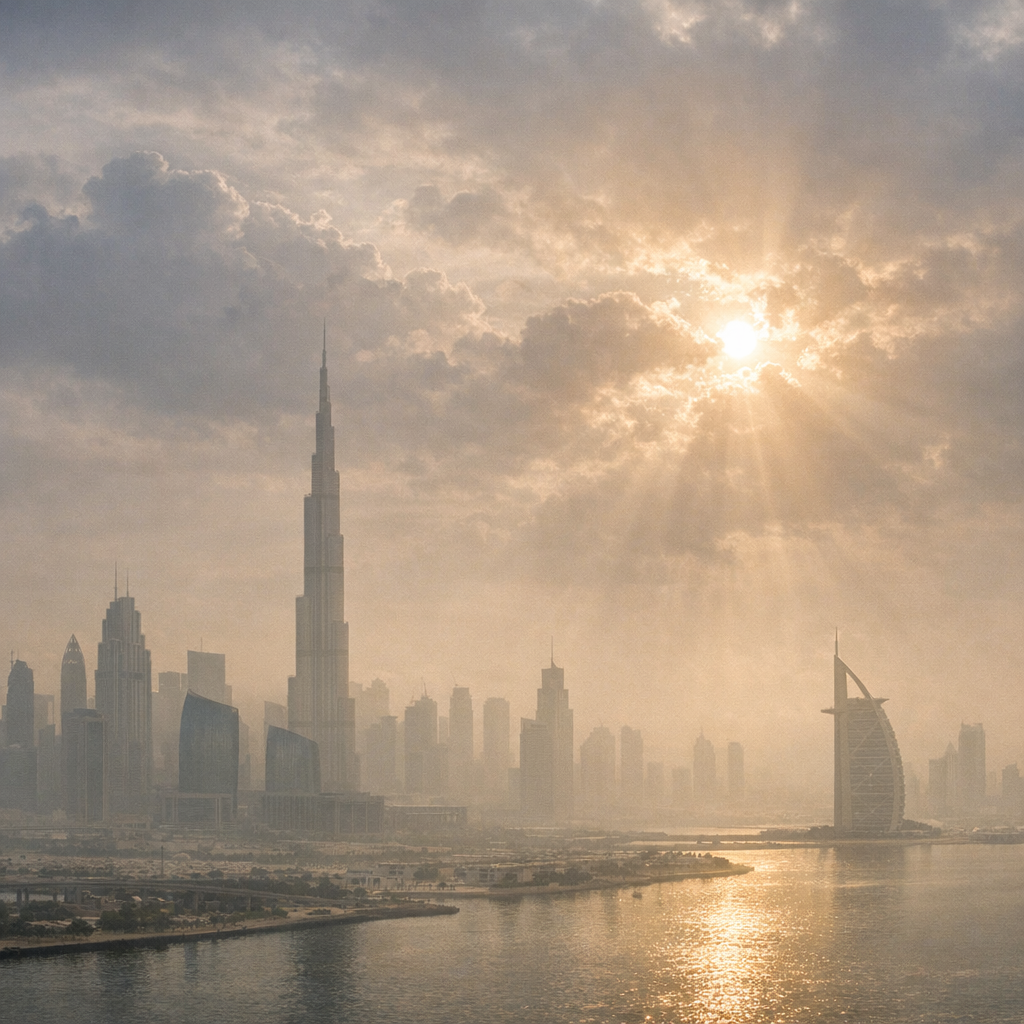
Dubai lies at the heart of a desert climate—hot summers, warm winters, sparse rainfall—but subtle changes in temperature, humidity and weather patterns are reshaping life here. What was true a decade ago often feels different now.
Seasonal Rhythms: More Than Just Heat and Dust
Dubai’s year can be divided into distinct phases:
- Winter (December to March): With daytime highs around 24–25°C and cooler nights, this season is when most rain falls, especially in January and February. Ideal for being outdoors.
- Spring (March–May): Temperatures climb steadily. Dust events and haze become more frequent. Weather becomes less predictable as heat builds.
- Summer (June–September): Extreme heat and high humidity dominate, especially along the coast. Inland deserts reach soaring highs, coastal areas are heavy and sultry. Air conditioning becomes a necessity.
- Autumn Transition (October–November): The heat eases. Evenings start to cool and outdoor life returns. Occasional rainfall or fog may appear as temperatures and humidity shift.
Environmental Shifts: What’s Changing and Why It Matters
Rising Heat Levels and Longer Summers
While summer still peaks during July and August, recent observations suggest it begins earlier—sometimes in late spring—and ends later. Winter feels shorter and less crisp. Daytime highs and overnight lows have both increased, especially in desert and coastal areas, making breaks between seasons feel less distinct.
More Rain, Greater Risk
Though total rainfall in Dubai remains low, more frequent intense bursts—especially in winter—are straining drainage systems. Torrential thunderstorms and sudden floods are no longer seen as once-in-a-decade events. This shift increases risk for roadways, infrastructure, and coastal areas.
Humidity, Air Quality, and Human Comfort
Heat is only part of the story. Coastal humidity especially—combined with rising overnight temperatures—makes summer feel much hotter than the thermometer indicates. Dust storms and haze during transitional months further reduce visibility and add stress to those with respiratory conditions.
Practical Tips: Staying Safe and Comfortable
- Avoid strenuous activity during late morning and early afternoon in summer. Early mornings and evenings are better suited for outdoor exercise.
- Use weather apps to monitor air quality and dust. Keep windows closed when AQI is high, and use air purifiers or indoor cooling smartly.
- Be ready for short but sudden rain or storms in winter—ensure drains are clear and avoid low-lying areas when travelling.
- Stay hydrated, wear light breathable clothing, and protect yourself from the sun—especially during peak summer or when humidity spikes.
Looking Ahead: Awareness and Adaptation
As Dubai’s weather becomes less predictable, planning—both by individuals and institutions—will matter more. Infrastructure needs to account for intense rain, urban planning must address heat island effects, and public health systems now factor in longer heat exposure and lower air quality days.
We all play a role: by learning how weather is changing, adjusting daily habits, and supporting sustainable solutions, we can better live with, and protect, our city’s environment.