

By Layla Al-Mansoori
What is driving sea level rise?
Global sea levels rose roughly 91 millimetres since 1993, according to satellite-based measurements. That increase is happening for two main reasons: melting of glaciers and ice sheets on land, and the expansion of ocean water as it warms. Smaller contributors include changes in how water is stored on land and movements in Earth’s crust. The trend is accelerating.
Why this is more than just a far-away issue
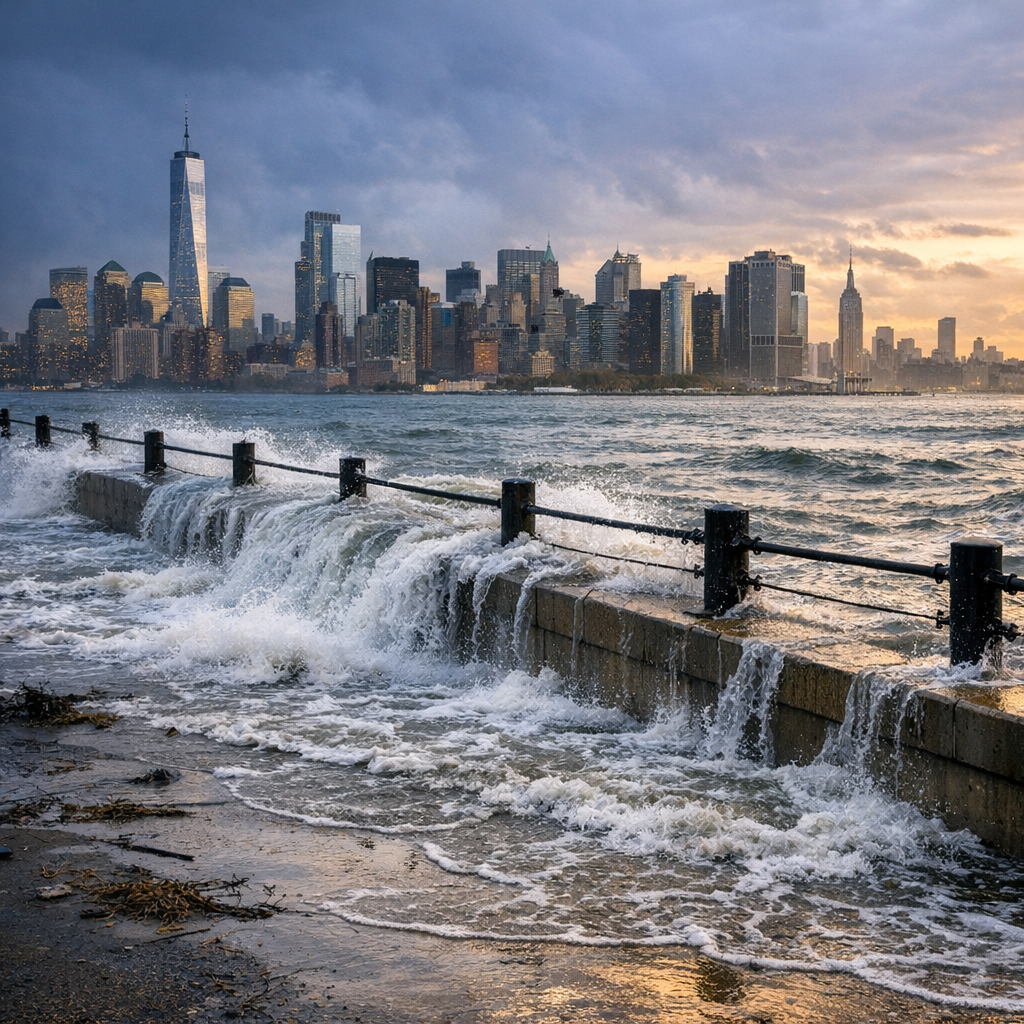
The effects of sea level rise are global but locally specific. Coastal erosion, higher tides, flooding from storms, damage to infrastructure, saltwater intrusion into freshwater supplies—all occur in many parts of the world today. Even cities with modern sea defenses face greater risk over time.
For communities already near or at sea level, small increases make a big difference. Many regions with low elevation and dense populations may find that what used to be occasional high tides or coastal surges become daily disruptions. That has implications for homes, agriculture, transportation, public health and insurance systems.
What projections tell us
Recent assessments estimate that even if global warming is limited to 1.5 °C, average sea levels are likely to rise by at least 0.3 metres above year-2000 levels by the year 2100. In scenarios with higher greenhouse gas emissions or faster ice-sheet melt, the rise could be substantially larger.
What can be done—now and ahead
There are two broad approaches to responding: mitigation and adaptation. Mitigation means reducing greenhouse gas emissions—shifting energy sources, preserving ice-sheet stability, rerouting how water is stored on land. Adaptation means updating infrastructure—sea defences, managed retreat, updating building codes, preserving natural buffers such as mangroves or coral reefs.
For cities like Dubai and other coastal hubs, planning is key. Elevating critical infrastructure, designing resilient waterfront developments, and integrating long-term risk into urban and economic planning can protect both people and investments.
Why each fraction of a degree matters
Data show that every small rise in global temperature contributes disproportionately to sea level rise. The more the planet warms, the faster land-based ice melts and the more water expands. That means the difference between limiting warming by a fraction of a degree can translate into several centimetres of sea level difference—and that matters for coastal safety and costs.
How we can stay informed and engaged
- Follow scientific reports from institutions like the UN, NASA and NOAA for reliable projections and local implications.
- Support local policies that favour climate resilience—urban planning, weak building codes, managed coastline zones.
- Encourage community awareness—knowing flood risks and understanding climate impacts helps communities adapt.
- Promote sustainable action—renewables, energy efficiency and global agreements all play a role.
Sea level rise is not a distant danger—it’s a change already underway that will shape the lives of billions. How we respond today will determine how resilient our world becomes tomorrow.