

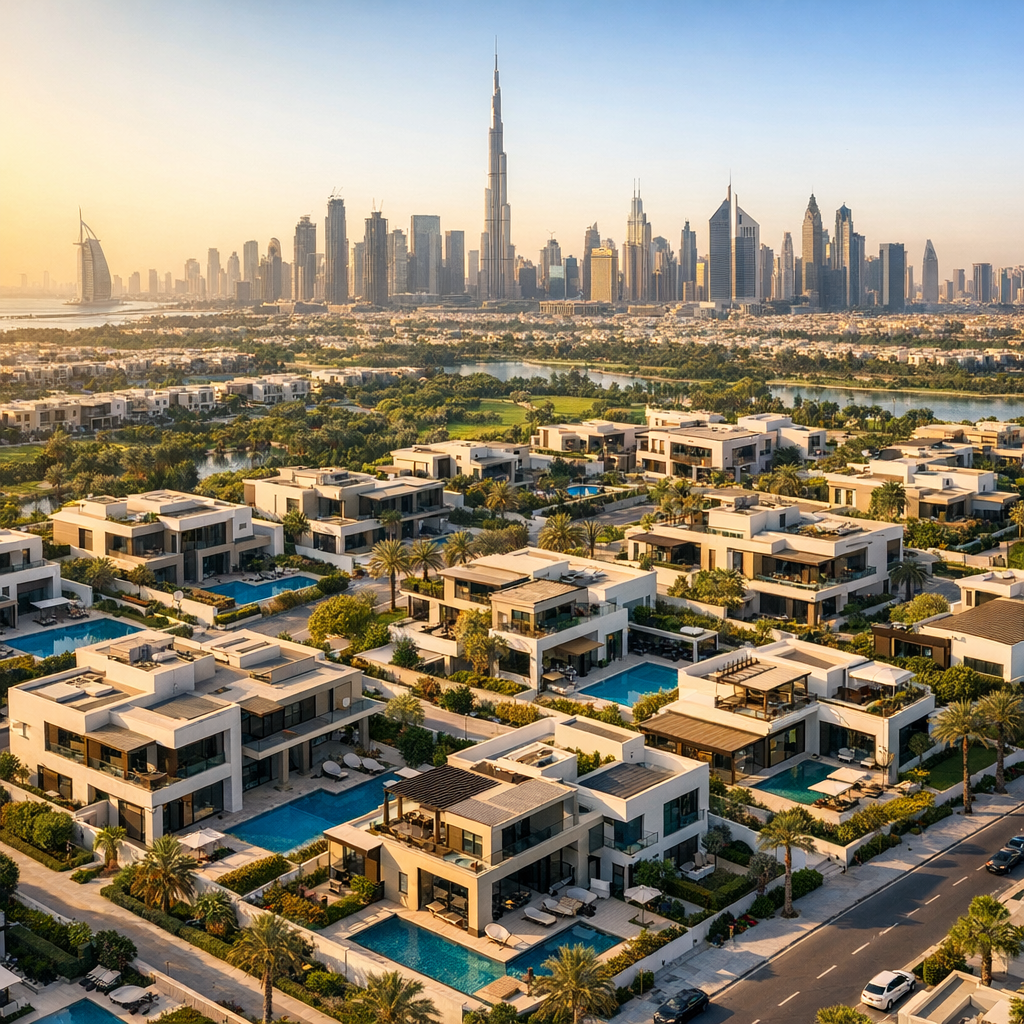
Dubai’s housing market continues to adapt to changing supply patterns, growing resident numbers, and evolving buyer preferences. Whether you’re renting, buying, or investing, knowing what’s happening—and where—is more important than ever.
Rental Market: Stabilisation Amid Growth
After a period of steep growth, many apartment-rentals now show signs of moderation. While rents for 2025 rose across Dubai, apartment-heavy communities are expected to experience flatter rent growth through late 2026. Areas with limited new supply—especially villa or waterfront neighbourhoods—remain more stable in prices. Average gross rental yields hover around 6.6% overall, with apartments slightly higher than villas.
Supply & Demand: Apartments vs Villas
A large volume of new residential units is under construction—nearly half of them small-format apartments (studios and one-beds)—in submarkets like Dubai South, MBR City, Dubailand and Business Bay. These are raising supply pressures in those neighborhoods. In contrast, villas and townhouses are much scarcer in new supply, which supports stronger pricing and demand for family-friendly and luxury options.
Buying Trends: Off-Plan & Pricing Choices
Off-plan properties continue to dominate sales transactions—making up over 70% of residential purchases in recent periods. Buyers are showing more selective behaviour: reputation of developers, project location, payment plan structure, and long-term investment potential are weighing more heavily in decisions. Meanwhile luxury segment transactions remain strong, particularly for homes worth over USD 10 million.
Tips for Buyers & Renters Navigating Now
- Look beyond showrooms: check developer track record, escrow account arrangements, Oqood or title deed status if off-plan.
- Think long-term supply: emerging areas may offer lower purchase prices but need infrastructure, transport and services to match.
- For renters prioritising value: consider moving to mid-tier or more affordable communities where rental growth has eased.
- Be aware of total costs: maintenance, service charges, utilities, and fees all add up, especially in premium communities.
What to Watch Going Forward
Key indicators to follow include: completion rates of under-construction units, absorption rates in oversupplied submarkets, regulatory changes (especially around leasing laws and rental index rules), and how global economic pressures affect buyers’ ability to pay. Keeping eyes on infrastructure upgrades and access—metro extensions, roads, schools—will help assess which communities may gain in appeal.
Dubai’s residential real estate is no longer in a runaway growth phase—it’s maturing. That means opportunity for those who stay informed, choose carefully, and align their goals with market realities.