

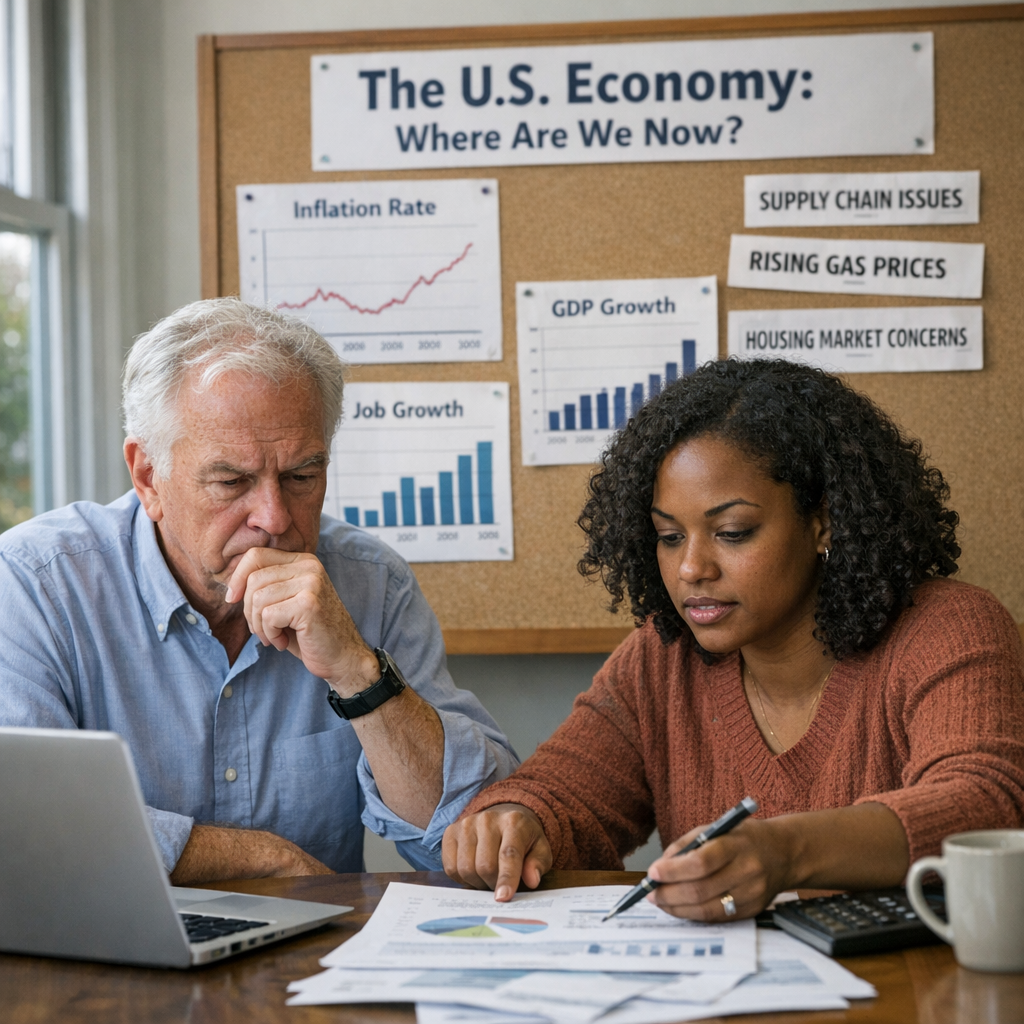
The United States economy has been navigating a complex landscape, influenced by various domestic and international factors. Recent data provides insight into the nation’s economic health, focusing on growth, inflation, and employment.
Economic Growth
In the fourth quarter of 2025, the U.S. economy expanded at a sluggish 0.7% annual rate, reflecting the impact of a 43-day government shutdown during that period. This growth rate indicates a slowdown compared to previous quarters, highlighting the challenges faced by the economy during times of political uncertainty.
Inflation Trends
Inflation has been a significant concern, with the annual rate reaching 4.2% in early 2026. This increase is partly attributed to rising energy costs and supply chain disruptions. The Federal Reserve has maintained interest rates to balance economic growth and control inflation, closely monitoring these developments.
Employment Landscape
The labor market has shown resilience, with hiring surging in May despite economic strains from international conflicts. This suggests that businesses are adapting to the evolving economic environment, although certain sectors continue to face challenges.
Consumer Confidence
Consumer confidence has experienced fluctuations, with recent surveys indicating a decline due to concerns over inflation and economic stability. This sentiment can influence spending behaviors, potentially impacting future economic growth.
In summary, the U.S. economy is experiencing a period of moderate growth, with inflation and employment trends being closely monitored. Policymakers and businesses are navigating these challenges to maintain economic stability and foster growth.