

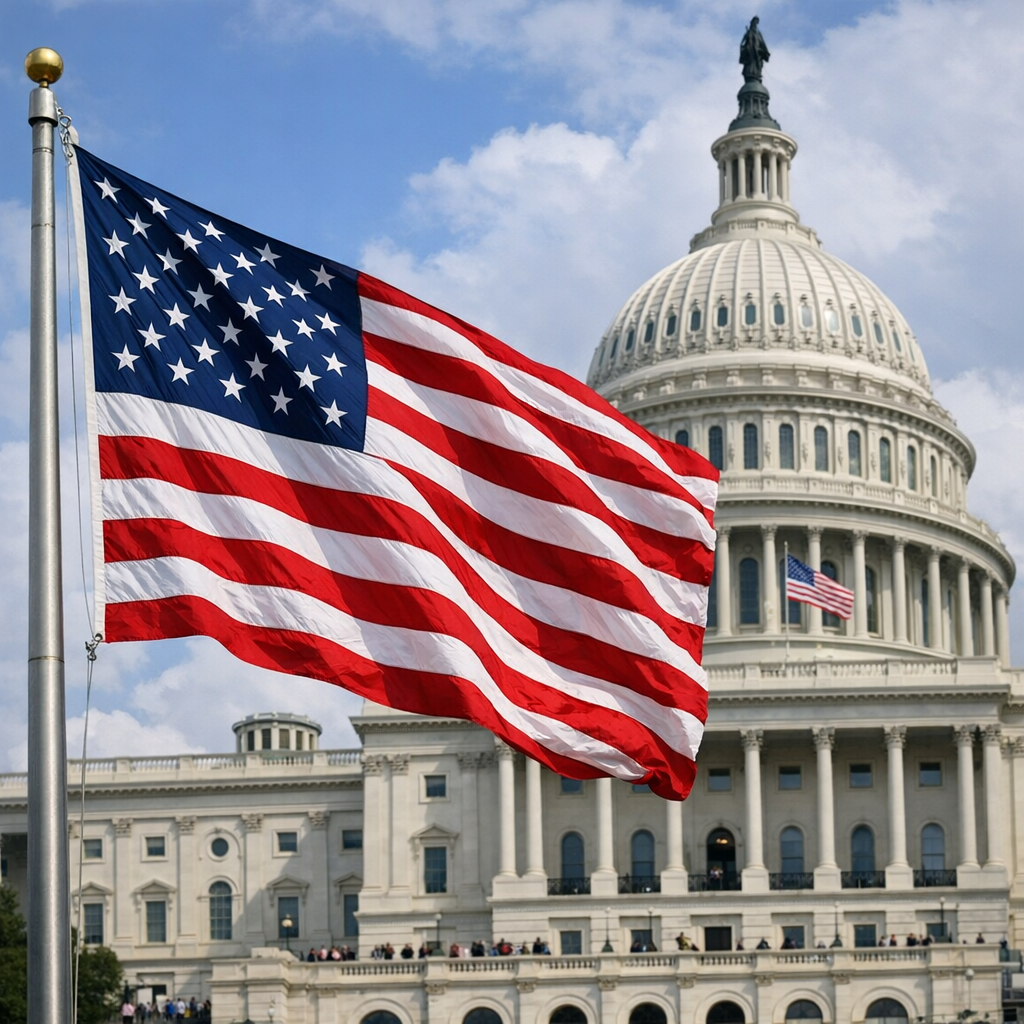
The United States operates as a federal presidential constitutional republic, characterized by a division of powers among three branches: the Executive, Legislative, and Judicial. This structure ensures a system of checks and balances, preventing any single branch from accumulating excessive authority.
Political Structure
The Executive Branch is headed by the President, who serves as both the head of state and government. The President is responsible for enforcing laws, conducting foreign policy, and serving as the commander-in-chief of the armed forces.
The Legislative Branch, known as Congress, is bicameral, comprising the Senate and the House of Representatives. Congress is tasked with drafting, debating, and passing legislation, as well as overseeing the federal budget and declaring war.
The Judicial Branch is led by the Supreme Court, which interprets laws and ensures they align with the Constitution. This branch plays a crucial role in resolving disputes and upholding the rule of law.
Economic System
The U.S. economy is a mixed-market system, blending free-market principles with government intervention. Private enterprises drive most economic activities, while the government regulates industries, provides public services, and implements policies to promote economic stability and growth.
Key sectors include finance, healthcare, manufacturing, and technology. The U.S. is also a significant player in international trade, being one of the world’s largest importers and exporters.
Understanding the interplay between the U.S. political and economic systems provides insight into how policies are formulated and implemented, influencing both domestic and global affairs.