

By Ali Al-Ameri
Everyday Journeys, Unseen Challenges
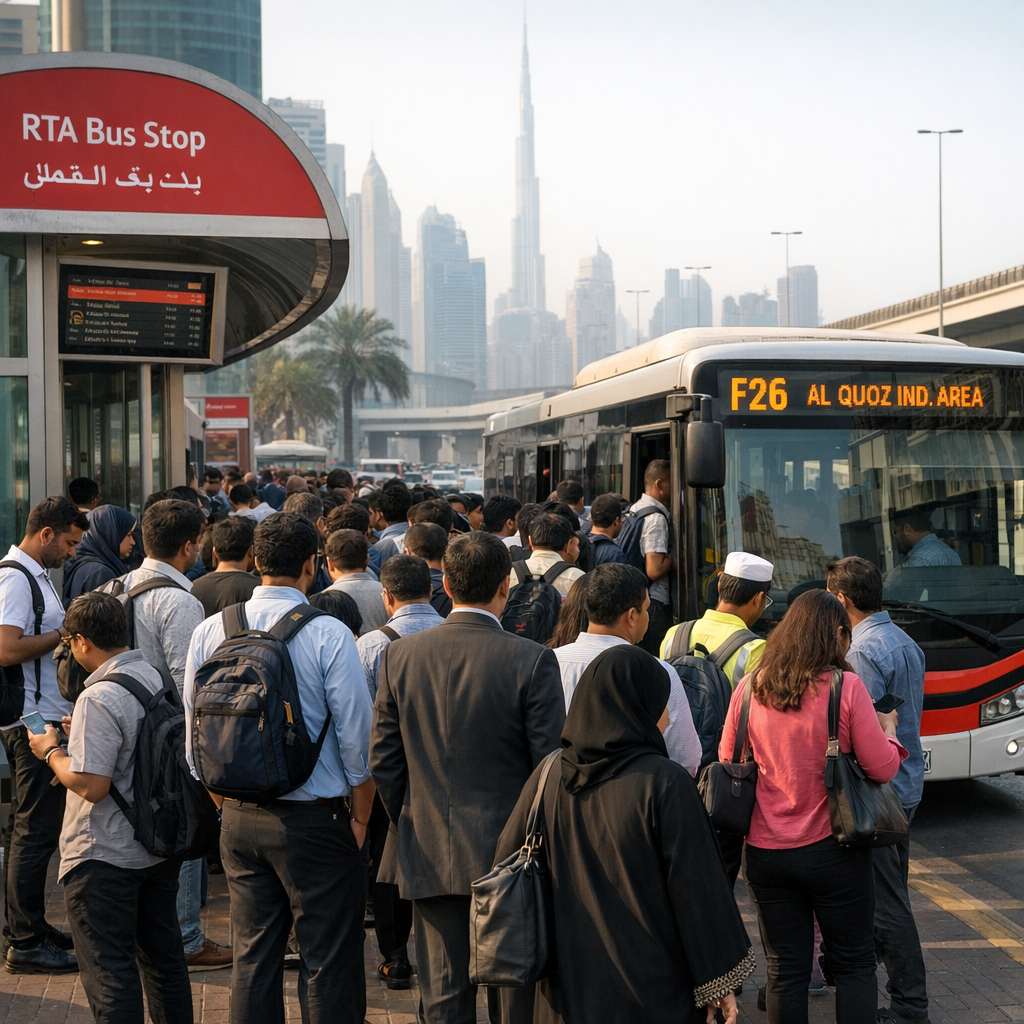
On paper, Dubai’s transportation system looks ahead of many cities—metro lines, trams, and a growing fleet of buses. But as someone who rides, waits, and walks through the daily grind, I see less about sleek infrastructure and more about what ordinary life throws at commuters.
The Heat and the Humidity
Dubai summer is weather that demands respect. For the thousands who travel during its peak hours, waiting at bus stops or walking between transit links without shaded shelters or reliable air conditioning turns every commute into a test of endurance. Some buses are drafted in from routes far out of town with negligible cooling inside—open windows barely mitigate the stifling heat, leaving riders exhausted before their journey ends.
Language Barriers and Confusing Paths
Migrant workers form a vital backbone of the city—and they often navigate a system not built with their needs in mind. Poor signage, limited translation, and inconsistent ticket interface designs mean many have to guess, ask for help, or risk missing buses and trains that are their lifeline. A recent study found that non-English or non-Arabic speakers often feel overlooked in how transport information is presented in Dubai. It’s more than inconvenient—it feels invisible.
Transit Gaps and Lost Time
Even where service exists, connectivity falters. Walking to the nearest metro station can be taxing for someone juggling multiple stops for work, errands, or caregiving. Bus schedules often don’t align with last-mile needs—routes are slow, wait times stretch, peak-hour crowding is common. When your daily journey involves standing in tight quarters or missing connections, commuting feels less like mobility and more like juggling.
What Can Change—and What We Can Demand
Inclusive Design and Clear Information
Updated signage in multiple languages—especially those common among migrant communities—can make a big difference. Ticket machines that guide with visuals, audio announcements with clear translation, and mobile apps that don’t assume local knowledge help people feel confident moving across the city without depending on others.
Comfort, Accessibility, and Coverage
Shaded walkways, air-conditioned waiting shelters, more frequent service during heat waves, and expanded bus-metro integration would ease much of the strain. Last-mile solutions—like bike-sharing, scooter lanes, or feeder buses—are worth push and funding. Dubai’s paths are wide enough; sooner than later, these need to be usable.
Voices from the Ground Informing Policy
Community forums, surveys in many languages, and public engagement campaigns should be more than boxes checked. When government planners walk routes commuters take—watch how people wait, fall behind, ask for help—they witness what data and schedules often miss. We must build policies rooted in lived experience.
Closing Thoughts
Commuting is inevitably a part of life in a growing city. But it should not be about what people tolerate—it should be about what the city offers as a public good. Every commuter, from a student catching the metro to a laborer riding a bus before sunrise, deserves dignity in movement: comfort, clarity, and care. Dubai has vision, but it needs voices like ours to steer its journey.