

By Khalid Al-Qasimi
Dubai’s Climate & Seasonal Patterns
Dubai is defined by its hot desert climate. Summer spans roughly from late April through early October when daytime highs often exceed 40 °C, nights stay warm, and humidity from the Arabian Gulf adds to the heat index. Rainfall in these months is rare, though occasional dust storms or thunderstorms may sweep in abruptly. In contrast, the “cool” season—from October to early April—brings milder days, cooler nights, and most of the city’s annual rainfall, often concentrated in winter and early spring. Coastal areas benefit from the moderating influence of nearby sea waters, while inland and desert zones see sharper temperature swings. Average annual rainfall hovers around 70-80 mm, concentrated in a few months, especially January and February.
Taking Note of Changing Trends
Temperature records show that summers are growing hotter and winters are becoming less distinct. Compared to past decades, recent years have delivered higher average summer maxima, and winter minimums are not dipping as low as before—especially in urban areas where heat accumulation intensifies overnight. Rainfall patterns are more variable: some years see heavier storm events, even flooding in low-lying or poorly drained areas, while interspersed drier years reduce the reliability of winter moisture.
Air Quality & Environmental Health
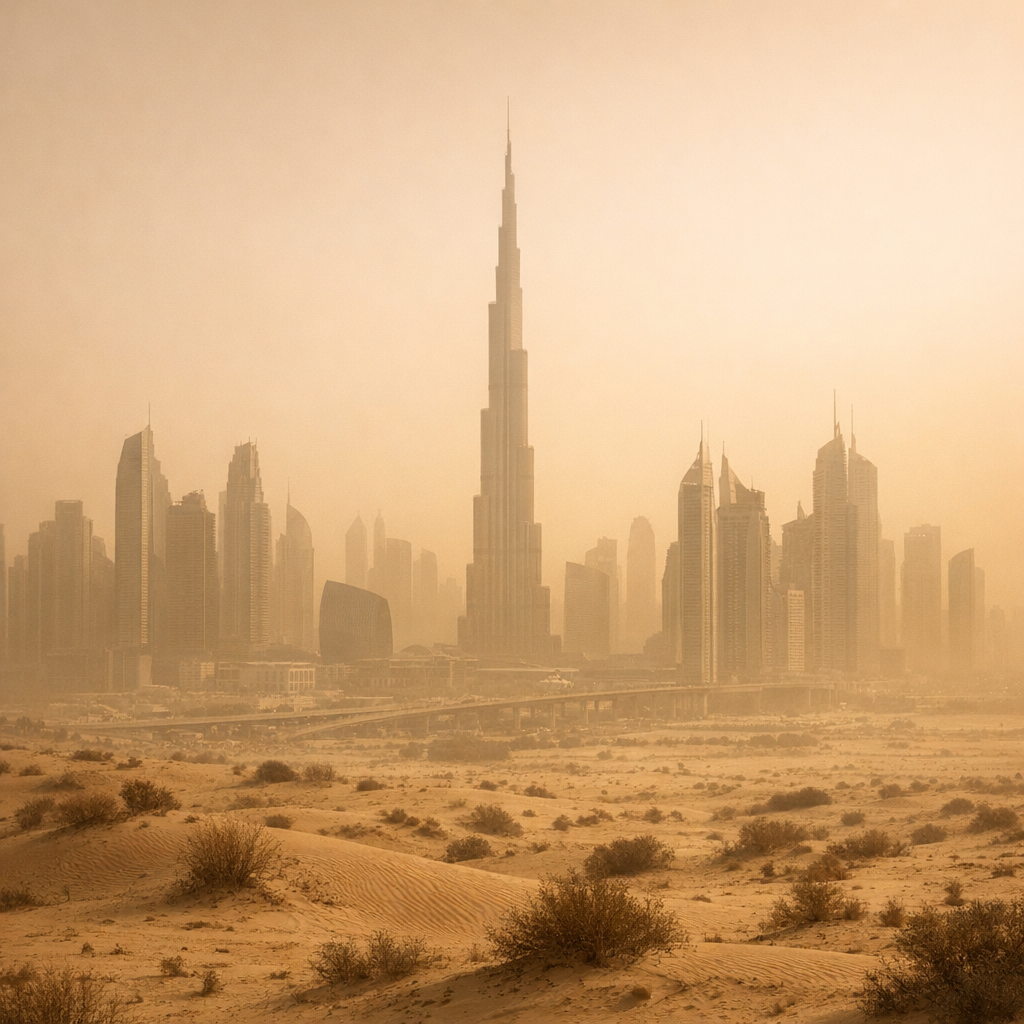
Air pollution remains a concern, particularly during dusty conditions or when pollutant emissions from traffic, construction, and industry combine with stagnant air. The UAE’s Air Quality Strategy 2021-2031 aims to improve visibility, reduce harmful particles and gases such as PM₂.₅, PM₁₀, NO₂ and others, and protect vulnerable populations. There’s a national platform with real-time monitoring of air quality across Dubai, offering data for citizens to make decisions on outdoor activity and exposure.
Water, Sustainability & Urban Impact
With little natural freshwater and scarcity of rainfall, Dubai depends heavily on desalination. Water demand, especially during peak heat months, is substantial. Sustainability initiatives—such as advances in waste management, renewable energy adoption, and environmental regulation—are playing a growing role in managing resources and reducing the environmental footprint of fast urban growth.
What Residents Can Do
- Avoid outdoor exercise during midday heat in summer; consider early mornings or shaded areas.
- Stay informed via the National Air Quality Platform; limit exposure outdoors when pollutant levels are elevated.
- Use water wisely—fix leaks, choose drought-tolerant landscaping, minimise high-water activities that strain supply.
- Support green spaces, native plants, and urban greening projects—these help cool surroundings and improve air quality.
- Be aware, prepare: retain flexibility in planning for sudden weather events such as storms, and observed shifts in season timing.
Dubai’s climate will always be defined by sun, sand and sea—but through awareness, smart planning and sustainable behaviour, residents can live more comfortably and help shape a healthier environment for future generations.