

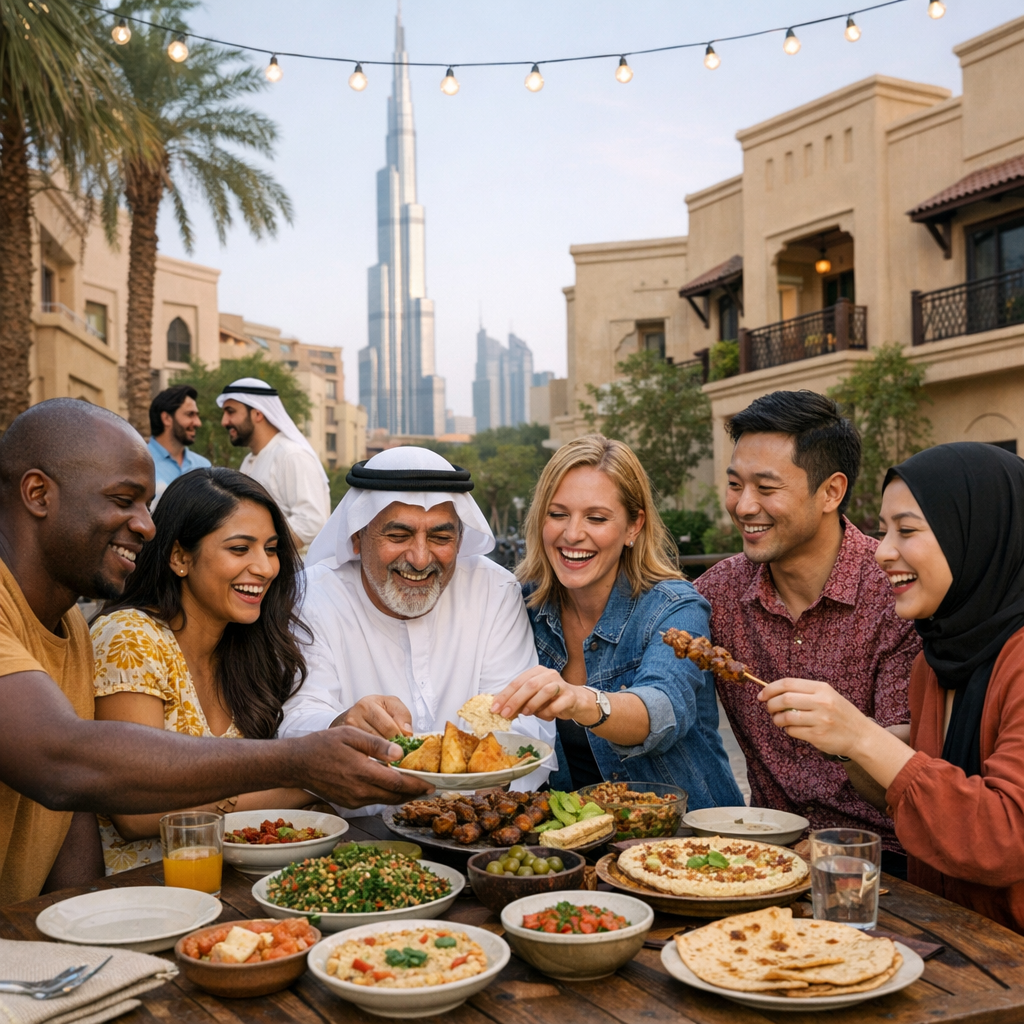
When people ask me what life is like in Dubai, I usually speak about what I’ve learned after years here: the friends I’ve made, the rhythms of festivals, the everyday small comforts. Dubai offers opportunity—to build, to grow, to meet people from everywhere—but a deep sense of belonging takes more work than a skyline view.
The challenge of connecting beyond routines
Dubai’s population is vast and multicultural. Many of us live among different nationalities and professions—but those differences sometimes feel like distance. Studies talk about “expat bubbles,” where people gravitate toward others from similar places and backgrounds. Conversations, social lives, even leisure activities often follow familiar lines. That makes sense—it’s human. It’s safe. But for some, it makes interaction with local culture feel distant.
Everyday gestures matter
It’s not always about big events—the small moments add up. A shared meal during Diwali, Onam or Eid. Greeting neighbours in the stairwell. A local craft or Arabic phrase learned not because one must, but because one wishes to. These are bridges between communities. For many expats who’ve built lives here, these little acts become anchors of identity, helping Dubai feel more like a home “here & there.”
The strength of mixed identities
I’ve met Gen Zers who speak more than one language, who celebrate more than one culture, who grew up here but also carry memories of “back home.” They represent something very modern: identities that aren’t fixed to one country. For them, belonging doesn’t mean choosing one identity over another, but embracing the mix.
What belonging looks like
- A sense of respect and openness—where someone can ask questions without fear of judgment.
- Spaces where cultures mix naturally—parks, libraries, neighbourhood cafés, volunteer groups.
- Public structure that encourages connection—not just work, but social interaction across divides.
- Cultural representation: festivals, food, language, local traditions visible in everyday public life.
Where we still have room to grow
Dubai is already working hard—for example, through start-ups and community groups like those that bring locals and expats together to share stories. But there are gaps. Many expats say homesickness is real. Many Emiratis say they want connection beyond professional contexts. We need more spaces for those moments between routines—places and moments where identity isn’t paused or side-stepped.
Shared stories, stronger roots
From years here, I believe belonging grows from storytelling. Share your personal Dubai: that unexpected festival you joined, the street you walked where accents shifted, a dish you discovered from a neighbour. When communities exchange these stories, they weave connection.
Belonging doesn’t arrive all at once. It shows up slowly—in smiling doors opened, in voices across tables, in journeying together from strangers to neighbours. Dubai may be many homes for many people. Making it home for more requires patience, kindness—and showing up in full.