

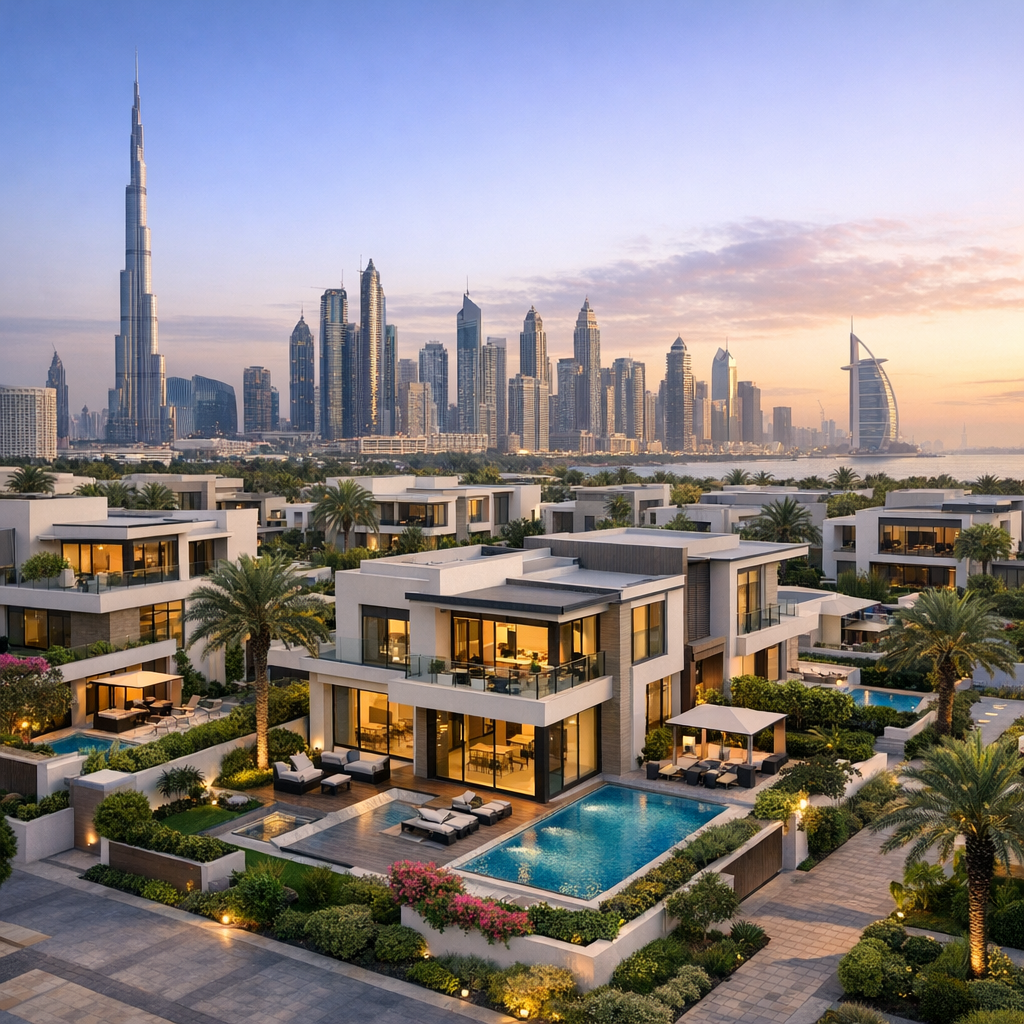
Dubai’s real estate scene is continuing its dynamic evolution. For buyers, renters or investors, understanding where change is happening can make all the difference. I’m Huda Al-Awadhi, walking you through current trends, emerging opportunities, and legal essentials for navigating housing in Dubai.
Rents: More Balance, More Negotiation
After several years of rent surges across all housing types, Dubai is entering a phase of *normalisation*. The latest data shows a cooling in rental price growth: overall, rents dropped 1.1% in the three months to May, with villas and townhouses seeing steeper declines than apartments. Yet rents remain well above pre-pandemic levels, nearly 9% higher year-on-year. Tenants are gaining more bargaining power, especially in areas with many new units. Established villa or waterfront regions are more resilient to change.
Where Prices Are Holding and Where They’re Moving
On the sales side, villa communities are seeing stronger interest and more robust price growth than many apartment areas. Luxury villa communities such as Dubai Hills Estate, Arabian Ranches, Al Furjan, and DAMAC Hills 2 have been particularly active. In contrast, many luxury apartment sectors are showing more modest movement in average price per square foot.
Best Communities to Watch for Investors and Homeowners
- Jumeirah Village Circle (JVC) – high transaction volumes, affordable compared to core luxury zones.
- Dubai Hills Estate – strong villa demand and steady growth in luxury segments.
- Downtown Dubai and Palm Jumeirah – remain ultra-luxury benchmarks and maintain value stability.
- Areas like DAMAC Hills 2, Al Furjan – attract seeking more space and better community amenities.
- Peripheral zones such as Dubai South – food for thought for longer-term capital growth, especially as infrastructure and connectivity improve.
Off-Plan and Land: Buying Early, Thinking Ahead
Off-plan properties continue to be a popular way for investors and end-users to enter the market. In 2024, new projects in Business Bay, Sobha Hartland 2 and Meydan saw strong interest. JVC also remained a favourite for off-plan apartment purchases, thanks to competitive pricing and a large number of options.
For those seeking land plots, freehold areas such as Jebel Ali, Nad Al Sheba, Al Furjan, and Al Barsha are at the top of the list. Be sure to verify plot ownership status carefully before any purchase.
Legal Landscape & Ownership Rules Every Buyer Should Know
Foreign nationals may own freehold property in Dubai in designated areas; these rights allow full ownership of residential units. Property registration and transactions are managed by Dubai Land Department (DLD). All brokers must be licensed by the Real Estate Regulatory Agency (RERA) and registered.
Residency options tied to real estate have become clearer: purchasing a freehold property above certain value thresholds may entitle owners to multi-year real estate residencies. Requirements include full payment, medical fitness, and being physically in the UAE.
What This Means for You
If you’re renting, it may be a good time to negotiate—there’s more supply and more flexibility. If you’re buying, weigh villa communities versus apartments based on lifestyle and budget. For off-plan or land purchase, long-term growth promises appeal—but risks include delays and infrastructure rollout.
Before signing anything, check ownership rights, freehold status, developer reputation, and whether your purchase qualifies for residency or other benefits. These legal and financial checks can change everything.
Bottom line: Dubai’s housing market is adjusting. Not a collapse, but a move toward more thoughtful demand, cautious price gains, and stronger protections. It’s an environment where good decisions will pay off.